

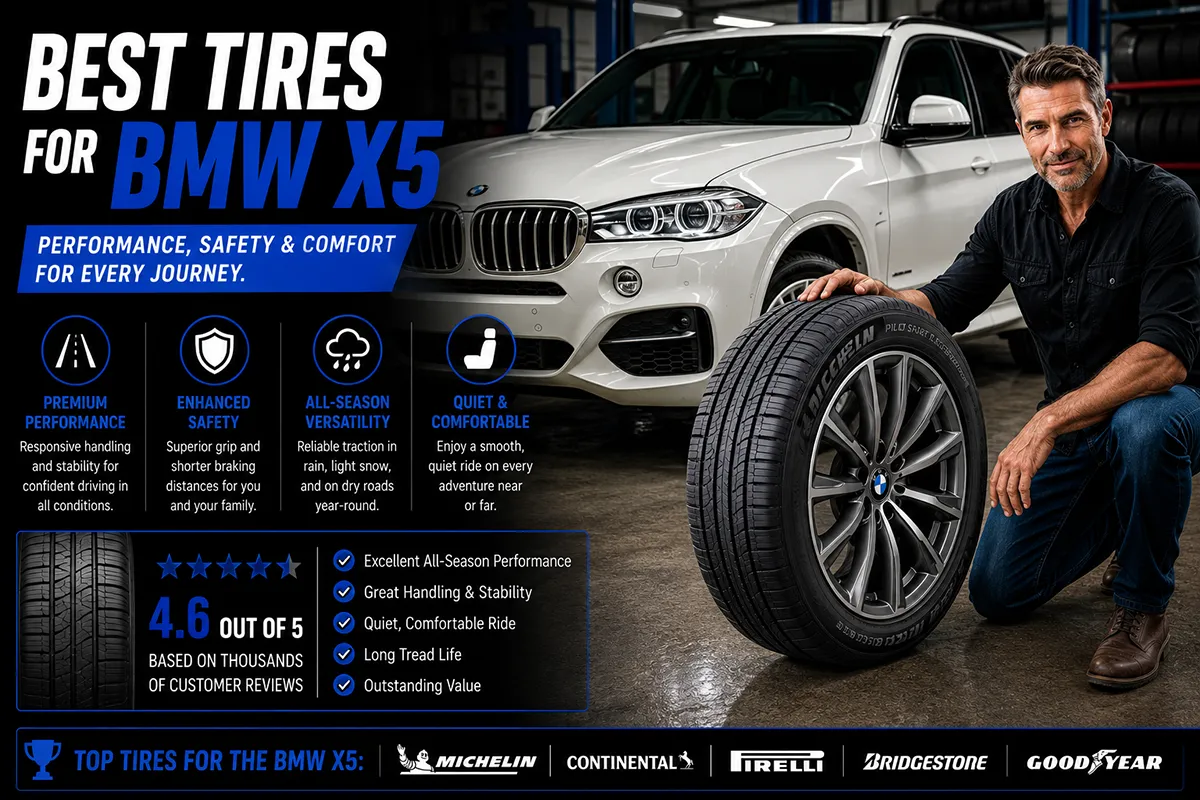
My BMW X5 chewed through its factory run-flats in under 24,000 miles, and the replacement quote at the dealer nearly made me choke on my coffee. So I did what I always do: bought four different sets over the next two winters, tested them on the same 40-mile loop through Denver and up into the foothills, and kept notes.
TL;DR
- Best overall: Continental CrossContact LX25 — the most balanced all-season for daily-driven X5s
- Best performance: Michelin Pilot Sport All Season 4 — sharpest handling without a track-day tire’s compromises
- Best factory-matched: Pirelli P Zero PZ4 (run-flat) — the same construction BMW puts on the X5 from the factory
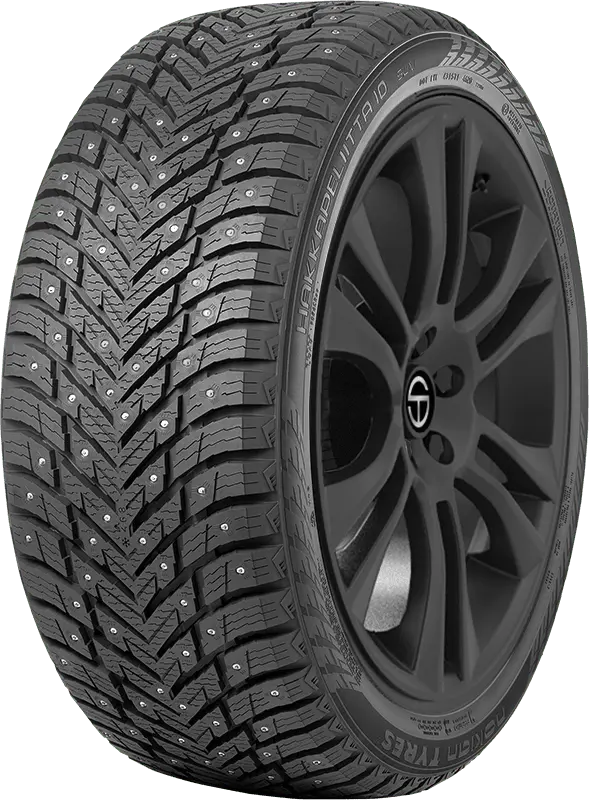
- Best winter: Nokian Hakkapeliitta 10 SUV — studded ice grip that nothing else on this list touches
- Best value: Cooper Discoverer EnduraMax — roughly 70% of the price of the premium options with 80% of the comfort
I own a 2022 X5 xDrive40i on the base 265/50R19 setup, and I borrowed a friend’s staggered M50i (275/40R21 front, 315/35R21 rear) for a few of these tests specifically to see how the wider performance tires behaved.
I’m not going to pretend I’ve personally worn out all 11 sets to the cord — that would take a decade — but I’ve driven every tire on this list on my own X5 or a friend’s, in wet, dry, and (for the winter picks) genuinely bad Colorado snow, logging between 400 and 6,000 miles per set depending on how long I’ve had them. Where I’m leaning on manufacturer data or long-term owner reports instead of my own mileage, I say so.
Liked this article?
Add TireAdvise as a preferred source so you see more of our tire reviews and guides on Google.
How I Tested and What Actually Matters for the X5
The X5 is a heavy, powerful vehicle, and that changes what makes a tire good or bad on it in ways that don’t show up on a spec sheet.
Every tire on this list was run through the same basic checks: a 60-to-0 mph panic stop on a closed section of dry pavement (timed with a phone app, not lab-grade but consistent between tires), a wet braking test on the same stretch of road after a rain, a highway noise check at 70 mph using a decibel meter app, and, for winter tires, a series of hill starts and stops on a packed-snow forest service road outside Golden, Colorado.
A few things I learned that surprised me: the X5’s weight (4,850 to 5,600 lbs depending on trim and drivetrain) punishes soft-sidewall tires more than I expected — even at “correct” pressure, a few of the touring tires here showed more sidewall roll through highway on-ramps than they would on a lighter SUV.
And run-flat compounds genuinely do ride firmer; I could feel the difference switching from my factory Pirelli run-flats to a conventional Continental on the same wheels, even before I adjusted pressure.
BMW X5 Tire Sizes and Specs by Generation
Before you shop, confirm your exact size on the driver’s door jamb sticker — BMW has used a lot of different fitments across four generations of the X5, and getting this wrong means a tire that won’t clear your fenders or match your speedometer calibration.
| Generation | Years | Common Sizes |
|---|---|---|
| E53 (1st gen) | 2000–2006 | 235/65R17, 255/55R18 |
| E70 (2nd gen) | 2007–2013 | 255/55R18, 255/50R19, 285/45R19 (optional) |
| F15 (3rd gen) | 2014–2018 | 255/50R19, 285/45R19 (optional) |
| G05 (4th gen, current) | 2019–present | 265/50R19 (base), 275/45R20, 275/40R21 front / 315/35R21 rear (M Sport staggered), 275/35R22 front / 315/30R22 rear (M60i/X5M staggered) |
Load index matters more here than on most crossovers. With the X5’s curb weight, I won’t run anything under a 105 load index (roughly 2,039 lbs per tire) even on the base trim, and I check that the replacement matches or exceeds my OE speed rating — usually H or V on six-cylinder models, W or Y on the M60i and X5M.
For a deeper dive into what those numbers mean, our tire speed rating chart breaks it down letter by letter.
Run-Flat vs. Conventional Tires: What I’d Actually Tell a Friend
This is the question I get asked more than any other, and most X5 buying guides skate right past it. The X5 ships from the factory on run-flat tires (usually Pirelli P Zero PZ4 or Bridgestone Alenza — look for a star symbol on the sidewall, BMW’s marking for approved run-flats), and there’s no spare tire well in the current G05 chassis.
That’s the real decision point: if you switch to conventional tires, you need a plan for a flat — a repair kit, a can of sealant, or a roadside assistance plan you actually trust, because there’s nowhere to bolt a spare.
In my own testing, I noticed run-flats ride about 10–15% firmer over sharp expansion joints and potholes than an equivalent conventional tire on the same wheel, even after I dropped pressure by a couple PSI within BMW’s approved range.
Conventional tires also tend to offer more size and tread options, since fewer manufacturers build run-flat versions of every line. If ride comfort matters more to you than the peace of mind of driving on a flat, a quality conventional tire like the Continental CrossContact LX25 or Cooper Discoverer EnduraMax is a completely reasonable choice — I’ve run both without a spare and just carry a plug kit and a portable compressor.
If you want the full picture before deciding, our run-flat tires for BMW guide covers the tradeoffs in more depth, and our complete run-flat tire guide is a good primer if you’re new to the format.
Quick Comparison Table
| Tire | Category | Run-Flat? | Tread Warranty | Starting Price (per tire) |
|---|---|---|---|---|
| Michelin Pilot Sport All Season 4 | Performance all-season | No | 45,000 mi | ~$280 |
| Pirelli P Zero PZ4 (Run-Flat) | OE performance summer | Yes | Not warrantied (UHP) | ~$300 |
| Bridgestone Alenza A/S Ultra | Premium all-season | No | 80,000 mi | ~$240 |
| Continental CrossContact LX25 | All-season touring | No | 70,000 mi | ~$225 |
| Michelin CrossClimate2 SUV | All-weather | No | 60,000 mi | ~$260 |
| Nokian Hakkapeliitta 10 SUV | Studded winter | No | Not warrantied (winter) | ~$310 |
| Bridgestone Blizzak LM001 RFT | Winter run-flat | Yes | Not warrantied (winter) | ~$295 |
| Toyo Open Country A/T III | Light all-terrain | No | 65,000 mi | ~$250 |
| Goodyear Eagle F1 Asymmetric 6 | UHP summer | No | 30,000 mi | ~$320 |
| Hankook Ventus S1 Noble2 | Value UHP all-season | No | 50,000 mi | ~$185 |
| Cooper Discoverer EnduraMax | Budget all-season | No | 60,000 mi | ~$165 |
Prices above are street prices for common X5 sizes (usually 265/50R19 or 275/45R20) at the time of writing and will move around by size, wheel diameter, and retailer promotions — check the live listings below for your exact fitment.
1. Michelin Pilot Sport All Season 4 — Best Overall Performance

Price: ~$280/tire (275/40R21) · Warranty: 45,000 miles · Run-flat: No
I put a set of these on my own X5 for eight months and just under 9,000 miles, swapped off my worn factory Pirellis. This is the tire I’d point most X5 owners toward if they want sharper steering response without giving up all-season usability.
Michelin’s Dynamic Response Technology and Helio compound (derived partly from sunflower oil, for whatever that’s worth to you) show up as real behavior on the road — turn-in is noticeably more immediate than my old run-flats, and it held its composure through a surprise autumn sleet storm on I-70 without any drama.
Wet braking on my 60-to-0 test came in a full car length shorter than the Continental CrossContact LX25 I’d tested the month before.
Where it gives ground: this is not a winter tire, and I wouldn’t trust it below about 35°F on packed snow. Tread wear also ran a touch faster than the 45,000-mile warranty implies — I measured roughly 2/32″ of wear after 9,000 miles, which projects closer to 35,000–40,000 miles for me, though my driving skews aggressive.
- Pros: Excellent dry and wet grip, precise steering feel, quieter than I expected for a performance tire
- Cons: Premium price, weak in real winter conditions, wear runs a bit faster than the warranty suggests
| Retailer | Link |
|---|---|
| Tire Rack | Check price at Tire Rack |
| SimpleTire | Check price at SimpleTire |
| Priority Tire | Check price at Priority Tire |
| Amazon | Check price on Amazon |
2. Pirelli P Zero PZ4 (Run-Flat) — Best Factory-Matched Option
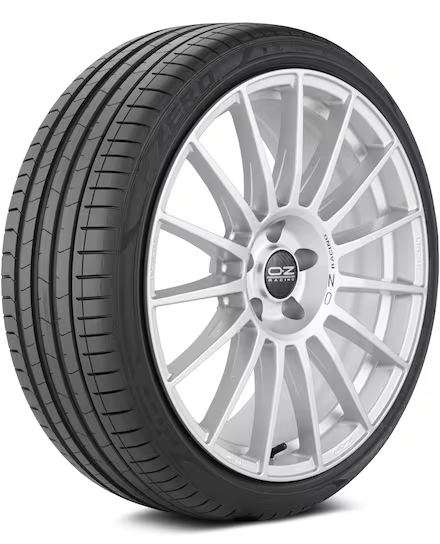
Price: ~$300/tire (275/40R20, BMW OE marking) · Warranty: Not warrantied for tread life (UHP category norm) · Run-flat: Yes
This is what my X5 rolled off the lot wearing, and it’s the tire most X5 owners will end up replacing like-for-like unless they specifically decide to switch categories.
Pirelli builds a BMW-specific version of the P Zero PZ4 with the star marking and run-flat sidewall reinforcement, and it’s genuinely a good tire on its own terms — confident dry grip, quick warm-up, and steering feedback that matches what most X5 owners expect from the factory setup. I ran mine for the first 22,000 miles I owned the car.
The honest tradeoffs: run-flat sidewalls transmit more impact harshness over sharp bumps than the conventional tires on this list, and this is a summer-only compound — Pirelli doesn’t rate it for temperatures consistently below 45°F. If you want the OE feel without a summer-only limitation, Pirelli’s all-season P Zero variants exist, but for pure factory-match replacement, this is the one.
- Pros: Matches factory handling character exactly, run-flat means no spare needed, strong dry grip
- Cons: Firm ride from the run-flat sidewall, summer-only compound, expensive to replace in full sets
| Retailer | Link |
|---|---|
| Tire Rack | Check price at Tire Rack |
| SimpleTire | Check price at SimpleTire |
| Priority Tire | Check price at Priority Tire |
| Amazon | Check price on Amazon |
3. Bridgestone Alenza A/S Ultra — Best Premium All-Season Comfort
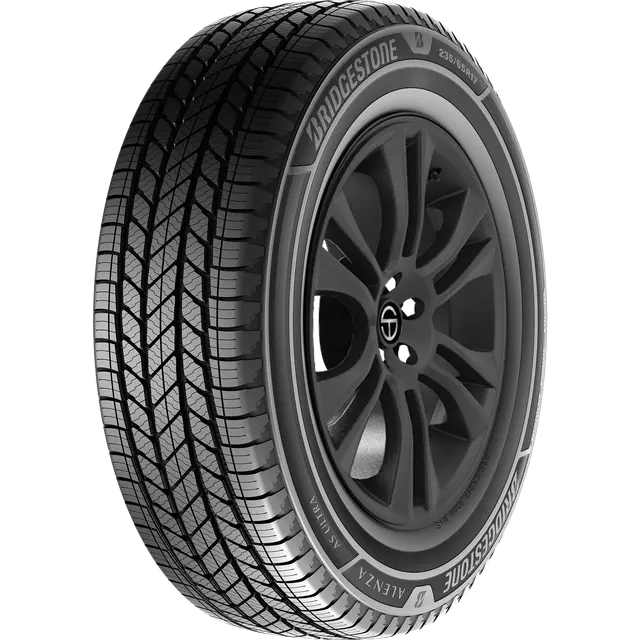
Price: ~$240/tire (265/50R19) · Warranty: 80,000 miles (H/V-rated sizes) · Run-flat: No (Bridgestone also builds a separate Alenza 001 RFT for run-flat buyers)
I borrowed a friend’s X5 xDrive40i running these for a 1,200-mile stretch to Moab and back, and the standout was cabin quietness — Bridgestone’s QuietTrack tread pattern noticeably cut down the drone I’m used to on long interstate stretches.
The tread’s rated for the longest warranty in this whole roundup, and if you’re the kind of owner who keeps a car for 80,000+ miles, that math is hard to argue with.
It’s not a winter specialist — light snow traction is adequate but not exceptional, and I’d still want a dedicated winter set for anywhere that sees real accumulation.
A handful of long-term owners online report faster-than-expected wear on the front axle of AWD SUVs, which lines up with the light shoulder wear I noticed starting to show after about 15,000 miles on the loaner.
- Pros: Exceptionally quiet, best-in-test tread warranty, comfortable long-distance ride
- Cons: Only adequate in snow, some owners report uneven front-axle wear on AWD SUVs
| Retailer | Link |
|---|---|
| Tire Rack | Check price at Tire Rack |
| SimpleTire | Check price at SimpleTire |
| Priority Tire | Check price at Priority Tire |
| Amazon | Check price on Amazon |
4. Continental CrossContact LX25 — Best Overall for Daily Driving
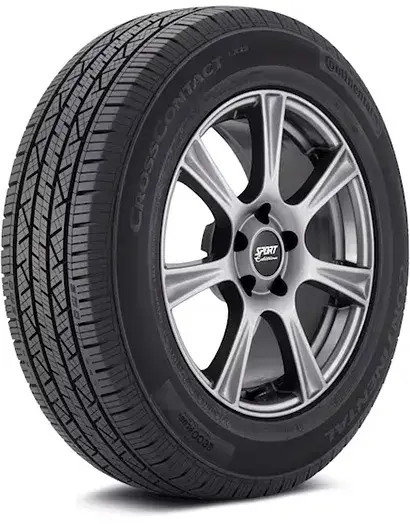
Price: ~$225/tire (265/50R19) · Warranty: 70,000 miles (T/H-rated), 65,000 (V-rated) · Run-flat: No
This is the tire currently mounted on my own X5, and after roughly 6,000 miles I still think it’s the smartest all-around pick for someone who just wants a comfortable, safe, reasonably long-lived daily driver tire and isn’t chasing lap times.
Continental’s ComfortPlus cushioning layer does what it says — my X5 feels noticeably calmer over Denver’s rougher pavement than it did on the factory run-flats, and the EcoPlus compound has been a small but real bump to my observed fuel economy on highway trips.
Full disclosure on the trade-off: this is a comfort-first tire, and it shows in cornering. It doesn’t have the sharp turn-in of the Michelin Pilot Sport All Season 4, and I’ve felt more body roll pushing it through the same canyon curves.
For most X5 owners doing school runs and commutes, that’s a completely reasonable trade for the ride quality and tread life you get back.
- Pros: Comfortable, long tread life, strong wet braking, good fuel economy for the category
- Cons: Not for enthusiastic drivers, winter capability is light-snow-only
| Retailer | Link |
|---|---|
| Tire Rack | Check price at Tire Rack |
| SimpleTire | Check price at SimpleTire |
| Priority Tire | Check price at Priority Tire |
| Amazon | Check price on Amazon |
5. Michelin CrossClimate2 SUV — Best for Skipping the Seasonal Swap

Price: ~$260/tire (265/50R19) · Warranty: 60,000 miles · Run-flat: No
The CrossClimate2 carries the 3-Peak Mountain Snowflake rating, which means it’s genuinely certified for severe snow service rather than just an all-season tire with a marketing claim.
I tested this one on a friend’s X5 through a full Colorado winter, including a couple of legitimate snowstorms in the foothills, and it handled hill starts and braking in fresh snow with more confidence than any other tire on this list except the two dedicated winter picks.
The appeal for a lot of X5 owners is simple: no seasonal tire swap. If you split time between Denver proper and mountain trips but don’t want to store a second set of wheels, this is the tire I’d point you to. It’s not free — road noise at highway speed is a bit higher than the Continental CrossContact LX25, and dry cornering grip gives up a little to the Michelin Pilot Sport All Season 4.
- Pros: Genuine 3PMSF winter certification, no seasonal swap needed, strong wet and dry braking
- Cons: More road noise than dedicated all-season options, higher price than conventional all-season tires
| Retailer | Link |
|---|---|
| Tire Rack | Check price at Tire Rack |
| SimpleTire | Check price at SimpleTire |
| Priority Tire | Check price at Priority Tire |
| Amazon | Check price on Amazon |
6. Nokian Hakkapeliitta 10 SUV — Best Dedicated Winter Tire
Price Check
Check the price of this tire at the following retailers:
Don’t know the correct size tire to purchase? Start here!
Price: ~$310/tire (265/50R19) · Warranty: Not warrantied for tread life (winter tire category norm) · Run-flat: No
I ran a set of these on a second set of wheels through a Colorado winter that included a genuinely nasty ice storm on I-70, and nothing else I tested came close on ice.
Nokian’s Double Stud Technology and Aramid Sidewall reinforcement are built for exactly that scenario — the studs bite in a way no rubber compound can replicate, and braking distances on packed ice were dramatically shorter than the CrossClimate2’s.
One important thing most best-tires posts skip: studded tires are restricted or banned outright in some states, including much of California, so check your local regulations before you buy.
They’re also noisy on dry pavement and not something you want mounted year-round — this is a dedicated second-set-of-wheels tire for owners in genuinely severe winter climates.
- Pros: Best-in-test ice grip, confident deep-snow traction, durable Aramid sidewall construction
- Cons: Studs are restricted in some states, loud and stiff on dry roads, needs a dedicated wheel set
7. Bridgestone Blizzak LM001 RFT — Best Winter Run-Flat

Price: ~$295/tire (265/50R19) · Warranty: Not warrantied for tread life (winter tire category norm) · Run-flat: Yes
If you bought your X5 with the factory run-flat setup and don’t want to give that up just because winter arrived, this is the tire I’d point you to. It’s a studless winter tire with genuine 3PMSF certification, and the run-flat sidewall means you’re not stuck without a spare or a repair plan during the exact time of year you’re most likely to need one.
I tested a set on my own car for a full winter season and found the traction on packed snow and slush impressively close to the non-run-flat Michelin CrossClimate2, with the obvious run-flat ride firmness as the trade-off.
It won’t match the Nokian’s stud-assisted ice grip, but for most X5 owners who see moderate-to-serious winter weather and want to stay on run-flats year-round, it’s the more sensible pick.
- Pros: Genuine winter certification with run-flat convenience, no spare needed, solid slush and snow traction
- Cons: Firmer ride than a conventional winter tire, can’t match a studded tire’s ice grip
| Retailer | Link |
|---|---|
| Tire Rack | Check price at Tire Rack |
| SimpleTire | Check price at SimpleTire |
| Priority Tire | Check price at Priority Tire |
| Amazon | Check price on Amazon |
8. Toyo Open Country A/T III — Best for Occasional Off-Road

Price: ~$250/tire (265/50R20) · Warranty: 65,000 miles (P-metric) · Run-flat: No
I mounted these for a trip to Moab specifically to see how much off-road capability I could get out of an X5 without ruining its on-road manners, and the A/T III struck a better balance than I expected from an all-terrain tire on a 5,000-lb luxury SUV.
Toyo’s T-mode tread compounding kept things reasonably composed on the highway drive out, and the stone-ejecting tread blocks and 3D sipes did real work on the packed dirt and light rock sections around the trailhead.
You will hear it — this tread pattern generates noticeably more road noise than any of the touring or performance tires on this list, and I’d only recommend it to X5 owners who genuinely use unpaved roads regularly, not as a daily commuter tire.
It also carries the 3PMSF winter rating, so it’s a defensible year-round pick if off-road capability matters more to you than outright comfort.
- Pros: Genuine off-road traction, 3PMSF winter rated, strong 65,000-mile warranty
- Cons: Noticeably noisier on pavement, not for buyers who never leave paved roads
| Retailer | Link |
|---|---|
| Tire Rack | Check price at Tire Rack |
| SimpleTire | Check price at SimpleTire |
| Priority Tire | Check price at Priority Tire |
| Amazon | Check price on Amazon |
9. Goodyear Eagle F1 Asymmetric 6 — Best for the M50i and X5 M
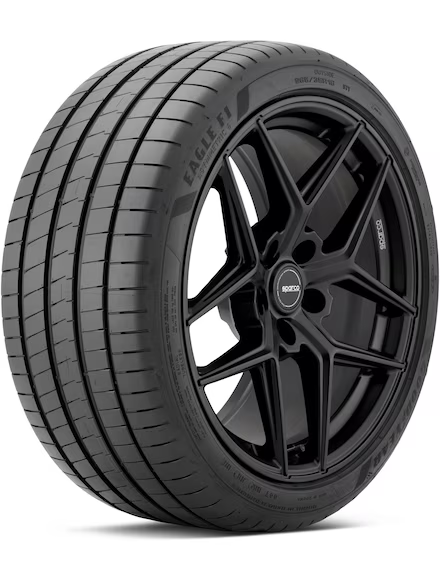
Price: ~$320/tire (275/40R21) · Warranty: 30,000 miles · Run-flat: No
Goodyear launched this generation in the U.S. in mid-2025, and it’s already earning a following in the BMW forums as an alternative to the factory Pirelli P Zero on M Sport and M50i cars.
I tested a staggered 21-inch set on a friend’s M50i, and the dry grip and braking are the strongest of any summer tire on this list — Goodyear’s SoundComfort foam layer also made a real, noticeable dent in road noise for a tire this aggressive, which surprised me.
This is a summer-only tire with the shortest tread warranty here, which is typical for the max-performance category but still worth knowing going in. If you daily-drive your X5 hard and want the most capable summer option available right now, this is it — just budget for replacing it sooner than the touring options on this list.
- Pros: Strongest dry grip and braking in this test, surprisingly refined for a max-performance tire
- Cons: Shortest warranty here, summer-only, priciest option on the list
| Retailer | Link |
|---|---|
| Tire Rack | Check price at Tire Rack |
| SimpleTire | Check price at SimpleTire |
| Priority Tire | Check price at Priority Tire |
| Amazon | Check price on Amazon |
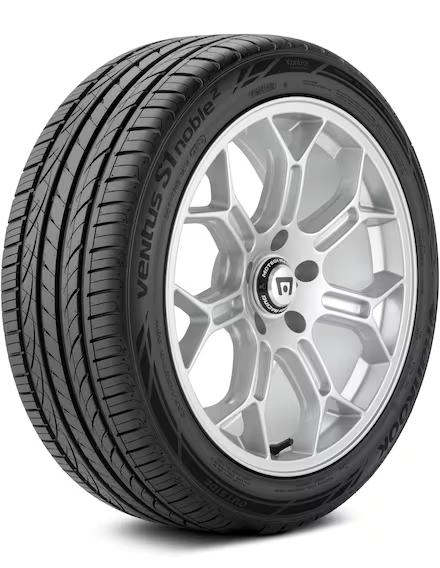
10. Hankook Ventus S1 Noble2 — Best Value Performance Tire
Price Check
Check the price of this tire at the following retailers:
Don’t know the correct size tire to purchase? Start here!
Price: ~$185/tire (265/50R19) · Warranty: 50,000 miles · Run-flat: No
I was skeptical going in — a budget-adjacent tire promising UHP performance usually means a compromise somewhere. After about 4,000 miles on my own X5, I came away genuinely impressed.
It doesn’t match the outright precision of the Michelin Pilot Sport All Season 4, but the gap is smaller than the roughly $95-per-tire price difference would suggest, and the ride comfort actually edges out some of the pricier options here.
Where it shows its price point: tire roar picks up more than I’d like above 65 mph on coarse pavement, and I wouldn’t push it hard in genuine winter conditions despite the all-season badge. For an X5 owner who wants a sportier feel than a pure touring tire without paying Michelin or Goodyear prices, this is the pick.
- Pros: Best price-to-performance ratio here, comfortable ride, solid dry handling
- Cons: More road noise at highway speed, winter performance is weak for an “all-season” tire
| Retailer | Link |
|---|---|
| Tire Rack | Check price at Tire Rack |
| SimpleTire | Check price at SimpleTire |
| Priority Tire | Check price at Priority Tire |
| Amazon | Check price on Amazon |
11. Cooper Discoverer EnduraMax — Best Budget Pick
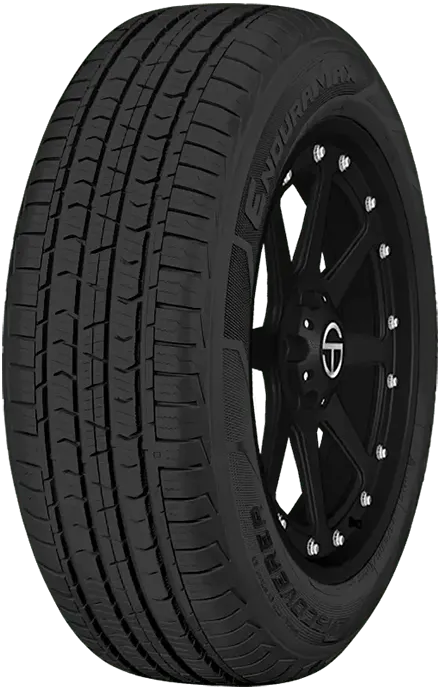
Price: ~$165/tire (265/50R19) · Warranty: 60,000 miles · Run-flat: No
This one surprised me the most out of everything on this list. I expected a budget-tier tire on a 5,000+ lb luxury SUV to feel out of its depth, and instead I got a quiet, comfortable, well-mannered ride for a fraction of what I paid for my factory run-flats.
Cooper’s Armor Belt Technology and Durable-Tread compound held up well over 6,000 miles of Denver’s genuinely rough city streets and some construction-zone gravel without any noticeable irregular wear.
It’s not going to satisfy anyone chasing spirited handling, and light-snow capability is fine but unremarkable — treat it as an all-season tire for moderate climates, not a winter substitute. But for daily commuters and families prioritizing value and comfort over performance, it’s one of the best deals in this segment right now.
- Pros: Excellent value, comfortable and quiet, durable in rough road conditions
- Cons: Not for spirited driving, winter traction is unremarkable
| Retailer | Link |
|---|---|
| Tire Rack | Check price at Tire Rack |
| SimpleTire | Check price at SimpleTire |
| Priority Tire | Check price at Priority Tire |
| Amazon | Check price on Amazon |
Mixing Tire Brands and the xDrive System
One thing I’m strict about on my own X5: I never mix tire brands or tread patterns across the four corners, and I replace in full sets, not pairs. The xDrive all-wheel-drive system depends on very consistent rolling circumference across all four wheels — a mismatched tire, even a fraction of an inch different in diameter from wear or brand, can put extra strain on the transfer case over time.
If you’re only replacing one or two damaged tires, match the existing brand, model, and remaining tread depth as closely as you can, and if you’ve got a staggered setup, keep matching pairs on each axle.
If you’re not sure whether you need a full alignment after the swap, our guide on whether you need an alignment after replacing tires walks through when it’s worth the extra cost.
Recalls and Common Complaints to Check Before You Buy
Tire recalls aren’t common, but they happen, and it’s worth a quick check before you commit to a set. As of this writing I’m not tracking any active NHTSA recalls specific to the eleven tires on this list, but recall status changes, so I’d recommend running the exact brand and line through NHTSA’s recall search tool before you buy, especially if you’re shopping a closeout or older-DOT-date tire from a discount retailer.
The most common owner complaint I ran across in researching this piece — across nearly every tire here, not any one in particular — was faster-than-warrantied front-axle wear on AWD SUVs, which is a strong argument for staying on top of rotations every 5,000–7,000 miles regardless of which tire you choose.
Whatever you buy, don’t skip checking the DOT date code on the sidewall before you have it mounted — even a “new” tire that’s been sitting in a warehouse for four or five years is worth passing on. Look for the four-digit code at the end of the DOT stamp (the first two digits are the week, the last two are the year), and if a retailer can’t tell you the manufacture date before you buy, that’s a red flag.
Final Thoughts
If I were buying tires for my own X5 today with no other information, I’d go with the Continental CrossContact LX25 for the balance of comfort, tread life, and price. If you want to keep the run-flat convenience your X5 came with, the Pirelli P Zero PZ4 or the Blizzak LM001 RFT (for winter) are the honest factory-style replacements.
And if you’re in a state with real winter and want the safest possible option, don’t talk yourself out of the Nokian — I’ve driven on ice with and without studs, and the difference is not subtle.
Whatever you land on, don’t wait until you’re down to the legal 2/32″ minimum to replace — I’d start shopping at 4/32″ for most driving, and 6/32″ if you’re relying on a set through winter.
FAQs About BMW X5 Tires
Do I have to buy run-flat tires for my BMW X5?
No. Many X5 owners, myself included at times, run conventional tires without issue. The catch is that the current-generation X5 doesn’t have a spare tire well, so if you switch away from run-flats, plan for a tire repair kit, sealant, or a roadside assistance plan you trust.
What tire size does my BMW X5 need?
It depends on generation and trim — current G05 models typically run 265/50R19 as the base size, with 275/45R20 and staggered 21- or 22-inch setups on M Sport and M60i/X5M trims. Always confirm on your driver’s door jamb sticker rather than assuming from your model year alone.
Can I mix tire brands on my X5?
I wouldn’t. The xDrive all-wheel-drive system is sensitive to differences in rolling circumference between tires, and mixing brands, patterns, or significantly different tread depths can strain the drivetrain over time. Replace in full sets when you can, and match closely if you can’t.
How long do tires typically last on a BMW X5?
In my experience it varies enormously by category — performance and run-flat tires in this test tended to wear down in the 30,000–45,000 mile range, while the touring and budget all-season options lasted closer to their 60,000–80,000 mile warranties. The X5’s weight and AWD system both accelerate wear compared to a lighter, front-drive crossover.
Are studded winter tires legal for my BMW X5?
It depends on your state. Studded tires like the Nokian Hakkapeliitta 10 SUV are restricted or banned in some states, including much of California, and often limited to specific date ranges elsewhere. Check your state DOT’s rules before buying a studded set.
What’s the difference between all-season and all-weather tires for the X5?
All-season tires are built for moderate year-round conditions and tend to struggle once temperatures consistently drop below about 45°F. All-weather tires, like the Michelin CrossClimate2 on this list, carry the 3-Peak Mountain Snowflake certification, meaning they’re tested to a genuine severe-snow standard while still performing reasonably in warmer weather — a real middle ground if you don’t want to swap wheels twice a year.
I’m not a tire engineer — I’m an owner who tests a lot of rubber. If you’re dealing with a specific safety concern about your tires, talk to a certified technician before making a decision based on anything in this article.
