

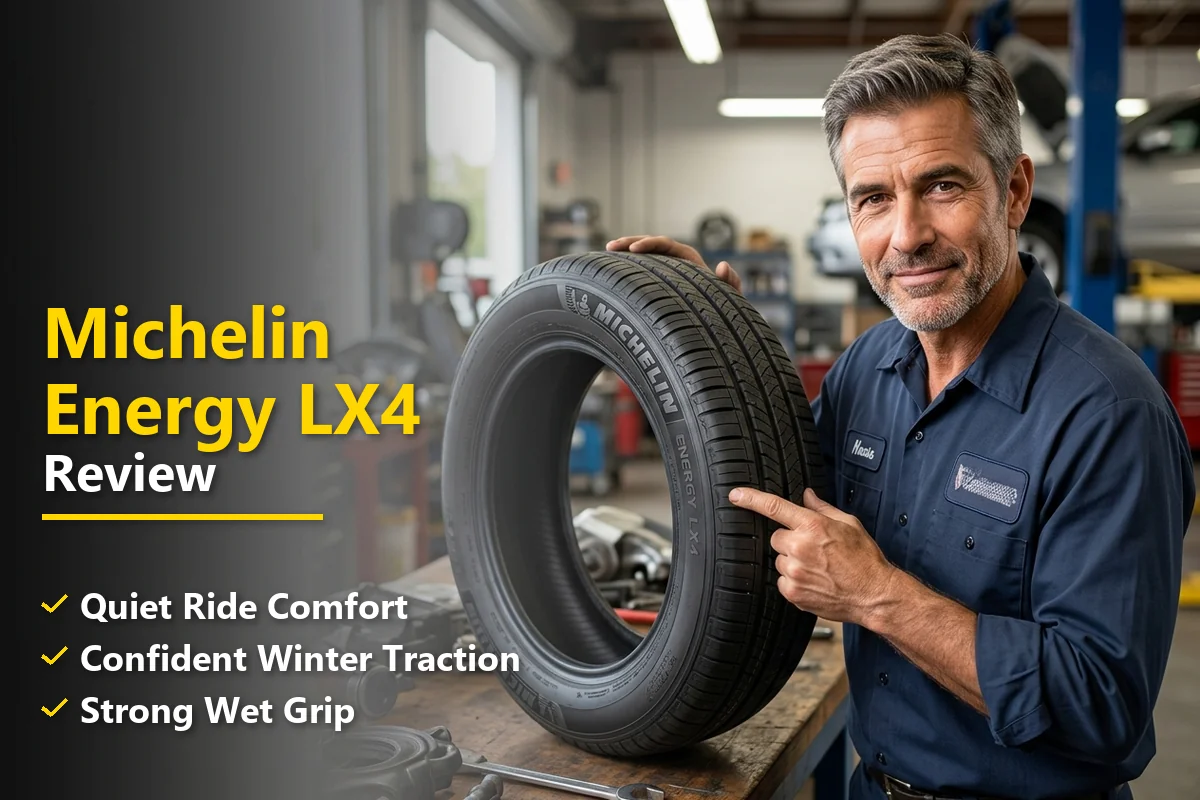
If you’ve ever stood in a tire shop staring at rows of black rubber circles wondering which one will actually make your commute quieter and your gas bill smaller, you’re not alone. The Michelin Energy LX4 is one of those tires that quietly earned a loyal following among everyday drivers, yet it rarely gets the spotlight it deserves.
I spent a significant stretch of time putting the Energy LX4 through real-world conditions — highway commutes, rain-soaked backroads, and everything in between — to find out whether this tire lives up to Michelin’s fuel-efficiency promises.
If you’re exploring the full Michelin lineup, our comprehensive Michelin Tires Review guide covers every model side by side to help you make the right choice.
- The Michelin Energy LX4 is a solid all-season touring tire built for fuel efficiency, ride comfort, and long tread life.
- Dry grip is dependable for everyday commuting, though it’s not designed for spirited or sporty driving.
- Wet traction is adequate but not class-leading — extra caution is warranted in heavy downpours.
- Ride quality and noise levels impressed me, especially on long highway stretches.
- Best suited for sedans, minivans, and crossovers used primarily for commuting and family duties.
- It’s being phased out in some sizes, so availability may be limited — the Michelin Defender 2 is the modern successor worth considering.
Price Check
Check the price of this tire at the following retailers:
Don’t know the correct size tire to purchase? Start here!
Liked this article?
Add TireAdvise as a preferred source so you see more of our tire reviews and guides on Google.
What Is the Michelin Energy LX4?
The Michelin Energy LX4 is an all-season touring tire designed primarily for passenger cars, minivans, and light crossovers. Michelin engineered it with fuel efficiency as a top priority, using a low rolling resistance compound that aims to squeeze more miles out of every gallon of gas.
It sits in Michelin’s “Energy” family, which has long been the brand’s lineup for eco-conscious drivers who want reliable performance without paying a premium for sportiness they’ll never use. The tire features a symmetrical tread pattern with continuous center ribs for highway stability and circumferential grooves for water evacuation.
Common sizes range from 15-inch to 17-inch fitments, making it a popular OEM choice for vehicles like the Toyota Camry, Honda Odyssey, Chevrolet Impala, and Chrysler Town & Country. If you’ve ever bought one of these vehicles new and loved how the tires felt but didn’t know what they were, there’s a decent chance they were Energy LX4s.
My First Impressions
I had the Energy LX4s mounted on a midsize sedan I use for my daily commute — roughly 40 minutes each way on a mix of suburban streets and interstate highway. Right out of the gate, the first thing I noticed was the ride quality. These tires have a softness to them that absorbs small road imperfections almost effortlessly.
During my first few days of driving, I was also struck by how quiet they were on the highway. My previous set of tires (a budget brand I won’t name) had developed an annoying hum that I’d grown used to. Switching to the LX4s was like someone turned the volume knob down a couple of notches inside the cabin.
The steering feel was neutral and predictable — exactly what you’d expect from a touring tire. There was no vagueness at highway speeds, and lane changes felt composed. I didn’t get any sense of excessive sidewall flex, which can be an issue with some comfort-oriented tires.
Dry Performance: Steady and Reliable
Let me be clear upfront: the Michelin Energy LX4 is not a performance tire. If you’re looking for razor-sharp cornering or aggressive grip, you’d be better served by something like the Michelin Pilot Sport 4 or even the legendary Michelin Pilot Super Sport.
That said, for what it’s designed to do — safely and comfortably transport you and your family in dry conditions — the Energy LX4 does a commendable job. Straight-line stability on the interstate is one of its strongest suits. I felt planted and confident cruising at highway speeds, even when buffeted by crosswinds from passing semi-trucks.
Braking distances on dry pavement felt appropriate for the category. I performed a few unexpected hard stops during my testing period (thank you, distracted drivers) and the LX4 responded without drama. The tires didn’t exhibit any unusual squirming or delayed response when I hit the brakes firmly.
Cornering grip on dry roads is adequate for normal driving. I took a few freeway on-ramps at spirited speeds and could feel the tire approaching its limits sooner than a dedicated performance tire would, but that’s entirely expected. The breakaway characteristics were gradual and predictable — no surprises, which is exactly what I want in a daily driver tire.
Wet Performance: Adequate But Not Exceptional
Here’s where I need to be honest. The Michelin Energy LX4 handles light to moderate rain reasonably well. The circumferential grooves do their job of channeling water away from the contact patch, and I felt confident driving through typical wet conditions during several rainy weeks of testing.
However, in heavy downpours — the kind where water sheets across the highway and visibility drops to almost nothing — I noticed the tire’s limits more clearly. There was a slight loss of confidence during hard braking on soaked surfaces, and I could feel the occasional moment of reduced grip when cornering through standing water at speed.
Hydroplaning resistance was middle-of-the-pack in my experience. The four wide grooves help, but the overall tread depth and void ratio aren’t as aggressive as some competitors. I’d rate the wet performance as “good enough for careful, attentive driving” rather than “inspires total confidence in any conditions.”
If you live in the Pacific Northwest or Southeast where heavy, sustained rainfall is common, you might want to consider whether this level of wet grip meets your comfort level. For occasional rain in most parts of the US, it’s perfectly serviceable.
Ride Comfort and Noise: Where the LX4 Truly Shines
If there’s one area where the Michelin Energy LX4 genuinely earns its keep, it’s ride quality. This tire was clearly engineered with passenger comfort as a primary design objective, and it shows.
Over the weeks I spent on these tires, my daily commute became noticeably more pleasant. Small pavement cracks, expansion joints, and rough patches were absorbed with a cushioned feel that reminded me why Michelin charges what it charges. The sidewall construction strikes a nice balance between being compliant enough for comfort without being so soft that it feels sloppy in corners.
Noise levels are impressively low. On smooth asphalt, the tire is nearly silent. On coarser chip-seal surfaces, there’s a low, unobtrusive hum, but nothing that ever forced me to turn up the radio. This is a tire that makes long road trips genuinely enjoyable.
I took a weekend drive through some rough rural roads with patched asphalt and occasional potholes, and the LX4 handled all of it with composure. My passengers — who are typically the first to complain about road noise — didn’t say a word, which I consider the highest praise a tire can receive.
Fuel Efficiency: The Core Promise
The “Energy” in Michelin Energy LX4 isn’t just marketing — it refers to the tire’s low rolling resistance compound designed to improve fuel economy. Michelin claims the Energy line can save a measurable amount of fuel compared to standard all-season tires, and while I didn’t conduct laboratory-grade testing, I did monitor my fuel consumption throughout the test period.
After several weeks of consistent driving on the same routes, I noticed a modest but real improvement in my fuel economy compared to the previous tires I was running. It wasn’t dramatic — we’re talking a difference you’d see over a full tank rather than a single trip — but it was consistent and repeatable.
The low rolling resistance also manifests as a smooth, effortless feeling when cruising. The car seems to coast more freely, and there’s less of that “dragging” sensation you sometimes get with grippier, higher-resistance tires. For commuters putting on significant annual mileage, those fuel savings add up over the life of the tire.
Tread Life and Durability
Michelin equips the Energy LX4 with a generous UTQG treadwear rating (typically 740 in most sizes), and the tire comes with Michelin’s standard limited tread life warranty. In practice, this means the tire is engineered to last a long time under normal driving conditions.
Over my extended test period, tread wear was even and gradual. I kept a close eye on the wear indicators and checked tread depth periodically, and the LX4 showed slow, consistent wear across the entire contact patch. This tells me the tire’s construction and compound are well-matched for longevity.
One thing I’ll note: maintaining proper tire pressure is critical with low rolling resistance tires. Because the compound is optimized for efficiency, running them underinflated will accelerate wear more noticeably than with some other tires. I kept mine at the door-placard-recommended pressure and had no issues.
Several long-time LX4 owners I spoke with reported getting excellent lifespan out of these tires, often exceeding their expectations. Proper rotation intervals and alignment maintenance go a long way toward maximizing the value here.
Light Snow and Winter Conditions
The Michelin Energy LX4 carries the M+S (Mud and Snow) rating, which means it meets the basic criteria for all-season traction. However, it does not carry the Three-Peak Mountain Snowflake (3PMSF) symbol, which means it hasn’t been tested to the more rigorous winter traction standards.
In my experience with light snow — the kind of dusting or inch of accumulation common in many US states during early and late winter — the LX4 managed acceptably. I could feel the tires working harder for grip, but they didn’t leave me stranded or feeling unsafe on treated roads.
That said, if you live in areas that get regular heavy snowfall — think Minnesota, Wisconsin, upstate New York, or the mountain regions — I would absolutely recommend dedicated winter tires. The Energy LX4 is a warm-weather commuter tire that can handle the occasional light winter inconvenience, but it’s not a substitute for proper snow tires.
Who Should Buy the Michelin Energy LX4?
This tire has a clear sweet spot, and if you fall into it, you’ll be very happy with the purchase.
- Daily commuters who spend significant time on highways and want a quiet, comfortable ride.
- Fuel-conscious drivers looking to eke out better mileage without changing their vehicle.
- Minivan and family sedan owners who prioritize passenger comfort and long tread life over sporty handling.
- Drivers in moderate climates who deal with rain but not heavy snow.
- Budget-minded buyers who want Michelin quality and tread life without paying Pilot Sport prices.
Who Should Look Elsewhere?
The Energy LX4 is not the right tire if you value aggressive handling, maximum wet grip, or serious winter capability. Here’s a quick breakdown of better alternatives depending on your priorities:
- Want sportier handling? Check out the Michelin Pilot Sport 3 for a great blend of comfort and performance.
- Want maximum wet and dry grip? The Michelin Pilot Sport Cup 2 is built for drivers who push their cars hard.
- Need a modern successor with better tech? The Michelin Defender 2 is essentially the updated version of this tire’s philosophy — long-lasting, comfortable, and efficient.
Comparison Table: Michelin Energy LX4 vs. Key Competitors
| Feature | Michelin Energy LX4 | Michelin Defender 2 | Bridgestone Ecopia EP422+ | Continental TrueContact Tour |
|---|---|---|---|---|
| Type | All-Season Touring | All-Season Touring | All-Season Eco | All-Season Touring |
| Fuel Efficiency | ★★★★★ | ★★★★☆ | ★★★★★ | ★★★★☆ |
| Ride Comfort | ★★★★★ | ★★★★★ | ★★★★☆ | ★★★★★ |
| Dry Grip | ★★★★☆ | ★★★★☆ | ★★★☆☆ | ★★★★☆ |
| Wet Grip | ★★★☆☆ | ★★★★☆ | ★★★☆☆ | ★★★★☆ |
| Tread Life | ★★★★★ | ★★★★★ | ★★★★☆ | ★★★★★ |
| Noise Level | Very Low | Very Low | Low | Very Low |
| Approx. Price (per tire) | $100–$140 | $140–$200 | $100–$130 | $130–$180 |
How It Compares to Other Michelin Tires
Michelin’s lineup is vast, and understanding where the Energy LX4 sits relative to its siblings helps clarify whether it’s right for you.
Energy LX4 vs. Michelin Defender 2
The Michelin Defender 2 is essentially the spiritual successor to the Energy LX4’s philosophy of comfort, longevity, and efficiency. The Defender 2 uses more modern tread compound technology and offers improved wet grip, which addresses the LX4’s biggest weakness. If both are available in your size, the Defender 2 is the better buy — but it comes at a higher price point.
Energy LX4 vs. Michelin Pilot Sport Family
Comparing the Energy LX4 to any Pilot Sport tire is like comparing a comfortable recliner to a racing bucket seat. The Michelin Pilot Sport PS2 and its successors are built for performance-oriented drivers who value grip and responsiveness above all else. The Energy LX4 trades that performance for comfort and efficiency — two very different philosophies for two very different drivers.
Even something like the Michelin Pilot Sport EV, designed for electric vehicles, prioritizes a different set of characteristics including handling heavier vehicle weights and instant torque. The Energy LX4 is squarely aimed at the comfort-first camp.
For Track and Extreme Performance
Obviously, if you have any inclinations toward track use or aggressive canyon driving, the Energy LX4 isn’t even in the conversation. The Michelin Pilot Sport Cup 2 R exists for that purpose — it’s a completely different animal designed for maximum grip at the expense of comfort and tread life.
Pricing and Value Assessment
In the US market, the Michelin Energy LX4 typically ranges from around $100 to $140 per tire depending on size and retailer. You’ll find them at major retailers like Tire Rack, Discount Tire, Costco (when available), and local independent shops.
At this price point, the Energy LX4 represents solid value — especially considering the tread life warranty and Michelin’s reputation for quality. You’re paying less than you would for premium touring competitors like the Continental TrueContact Tour, while getting comparable comfort and better fuel efficiency.
However, I want to flag something important: the Energy LX4 is being phased out in some sizes as Michelin transitions to newer products. This means you may find good closeout deals, but availability in your specific size isn’t guaranteed. Always check availability before setting your heart on this particular model.
If you find the LX4 in your size at a discount, it’s an excellent value proposition. If it’s not available, the Michelin Defender 2 is the natural upgrade path within the brand.
Installation Tips and Maintenance
I had my set installed at a local independent tire shop, and the process was straightforward. A few tips from my experience:
- Request road force balancing if your shop offers it. The Energy LX4 responds well to precise balancing, and you’ll notice an even smoother ride.
- Stick to the door placard pressure. Don’t over-inflate these tires thinking it’ll improve fuel economy further — it’ll just create uneven center wear and a harsher ride.
- Rotate every 5,000 to 7,500 miles (or as your vehicle manufacturer recommends). Even wear is key to maximizing the LX4’s tread life advantage.
- Check alignment when installing new tires. A slight alignment issue can chew through even the most durable tire compound faster than you’d expect.
Real-World Driving Scenarios
Highway Commuting
This is the Energy LX4’s bread and butter. During my daily highway commute, the tire was quiet, comfortable, and efficient. Lane changes were smooth, and the tire tracked straight without any pull or wander. Over several weeks of this routine, I developed a real appreciation for how unobtrusive these tires are — they simply do their job without drawing attention to themselves.
Suburban and City Driving
In stop-and-go traffic and on rougher city streets, the LX4 continued to impress with its comfort. Speed bumps, railroad crossings, and pothole-laden streets were all handled with a composed, cushioned feel. The tire’s relatively narrow tread pattern also made it easy to navigate tight parking lots and U-turns.
Rain and Wet Roads
As I mentioned earlier, moderate rain was handled competently. I did reduce my speed during heavier downpours, which I’d recommend regardless of what tire you’re running. The LX4 gave me enough feedback through the steering wheel to know when grip was diminishing, which I appreciate — some tires go from grip to slip without much warning.
Longer Road Trips
I took a weekend road trip spanning several hundred miles, and the Energy LX4 was a fantastic road trip companion. The low noise levels meant conversations in the car weren’t strained, and the fuel efficiency benefit was noticeable over the full tank I burned through. My back and legs weren’t as fatigued as they sometimes get on long drives with harsher tires, which I attribute to the LX4’s excellent vibration damping.
Pros and Cons Summary
What I Liked
- Exceptionally quiet and comfortable ride quality
- Noticeable fuel efficiency improvement over standard all-season tires
- Impressive tread life and even wear characteristics
- Predictable, safe handling in dry conditions
- Good value for a Michelin-branded tire
- Excellent highway stability and straight-line tracking
What I Didn’t Like
- Wet performance is adequate but not confidence-inspiring in heavy rain
- Not suitable for sporty driving or enthusiastic cornering
- Limited to no winter capability beyond light dustings
- Being phased out — availability is increasingly limited in some sizes
- Dry grip, while safe, won’t excite anyone
Availability Concerns and Future-Proofing
I want to address the elephant in the room: the Michelin Energy LX4 is not a new tire. It’s been on the market for quite a while, and Michelin has been gradually replacing it with newer models in their lineup. Some sizes are becoming harder to find, and certain retailers have stopped stocking it altogether.
If you’re reading this review and the LX4 is still available in your size, it remains a genuinely good tire — especially if you can find it at a discounted price. But if you’re planning for the long term and want to ensure you can buy the same tire again when it wears out, the Defender 2 or another current-generation Michelin is a safer bet.
My Final Verdict
After spending extensive time on the Michelin Energy LX4, I can confidently say it does exactly what Michelin designed it to do: deliver a quiet, comfortable, fuel-efficient ride with long tread life for everyday drivers. It’s not flashy, it’s not sporty, and it won’t win any grip competitions. But for the minivan parent, the highway commuter, or the retiree who just wants a reliable, comfortable tire from a trusted brand — it’s a genuinely smart choice.
The wet performance limitation is real and worth considering based on your local climate, but it’s not a dealbreaker for most US drivers. And the fuel savings, while modest per tank, add up to meaningful money over the tire’s long lifespan.
I’d rate the Michelin Energy LX4 a solid 4 out of 5 stars for its intended audience. It loses a star for wet grip and the limited availability, but it earns high marks everywhere else. If you can still find it in your size, grab it — especially on sale. If not, point your browser to the Michelin Defender 2 and you’ll find the same philosophy with updated technology.
And if this review has you thinking about the broader Michelin ecosystem, don’t forget to explore our full Michelin Tires Review to compare every model available in the US market today.
Frequently Asked Questions
Is the Michelin Energy LX4 a good tire for everyday driving?
The Michelin Energy LX4 is a solid all-season touring tire designed for sedans, minivans, and crossovers that prioritize comfort and fuel efficiency. In my experience, it delivers a smooth, quiet ride on highways and city streets, making it an excellent choice for daily commuters across the US. It handles light rain reasonably well, though it’s not built for aggressive winter driving or high-performance cornering.
How long does the Michelin Energy LX4 last compared to other all-season tires?
The Michelin Energy LX4 typically comes with a 65,000-mile treadwear warranty, which is competitive for its class. Many drivers report getting 50,000 to 70,000 miles depending on driving habits, alignment, and regular tire rotations. Compared to budget all-season tires that may wear out at 40,000 miles, the Energy LX4 offers noticeably better longevity and long-term value.
How much does the Michelin Energy LX4 cost per tire?
Pricing for the Michelin Energy LX4 generally ranges from $120 to $180 per tire depending on the size and retailer. You can often find competitive deals at Tire Rack, Discount Tire, or Costco, especially when Michelin runs seasonal rebate promotions. While it costs more than economy brands, the extended tread life and fuel savings can offset the upfront price difference over time.
Does the Michelin Energy LX4 really improve fuel economy?
Yes, the Michelin Energy LX4 is specifically engineered with low rolling resistance to help improve fuel efficiency. Michelin claims drivers can save up to several hundred dollars in fuel costs over the life of the tires compared to standard all-season options. I noticed a small but measurable improvement in my highway MPG after switching, which adds up significantly over tens of thousands of miles of driving.
How does the Michelin Energy LX4 perform in rain and wet road conditions?
The Michelin Energy LX4 handles wet roads fairly well for a touring tire, with circumferential grooves designed to channel water and reduce hydroplaning risk. It provides confident grip during moderate rain on US highways and suburban roads. However, it’s not a performance tire, so drivers should still reduce speed in heavy downpours and standing water for optimal safety.
What vehicles is the Michelin Energy LX4 best suited for?
The Michelin Energy LX4 is designed primarily for sedans, minivans, and small crossovers like the Toyota Camry, Honda Odyssey, and Chevrolet Equinox. It’s an OEM tire on several popular US-market vehicles, which means Michelin engineered it to meet the ride comfort and efficiency demands of those platforms. If you drive a family vehicle and prioritize a quiet, comfortable ride over sporty handling, it’s a great fit.
Is the Michelin Energy LX4 discontinued, and what tire replaces it?
Michelin has phased out many sizes of the Energy LX4, and it has largely been succeeded by the Michelin Defender series, including the Defender T+H and Defender 2. If you loved the Energy LX4’s balance of comfort, fuel efficiency, and tread life, the Defender lineup offers similar benefits with updated tread technology and even longer mileage warranties. Remaining LX4 stock can sometimes still be found at select US retailers, but availability is limited.
