

I’ve been writing about tires for over a decade, and yet every time I strap a new set onto my test vehicle, there’s still that small voice in my head asking — did I just waste $700? After running Dunlop tires across four of their most popular U.S. models for the better part of a year, I can finally give you an honest answer. I’ve also gone back to correct something important: who actually owns and backs this brand has genuinely changed since I first published this review.
⚡TL;DR – Dunlop Tires Review Summary
Dunlop makes solid, dependable tires that punch above their price point — especially for daily drivers, touring enthusiasts, and SUV/truck owners.
Important correction: Dunlop is no longer owned by Goodyear. In May 2025, Goodyear completed the sale of the entire Dunlop brand — trademarks, IP, and North American rights — to Sumitomo Rubber Industries, the Japanese company that also owns Falken. If you’re researching who backs the warranty and R&D behind Dunlop today, it’s Sumitomo, not Goodyear.
Their all-season options offer impressive wet-weather grip, and the performance line holds its own against pricier European brands. If you’re replacing tires on a family sedan, crossover, or light truck and don’t want to overpay, Dunlop deserves a serious look.
Liked this article?
Add TireAdvise as a preferred source so you see more of our tire reviews and guides on Google.
Why I Decided to Test Dunlop Tires
A neighbor of mine — a mechanic with 25 years under his belt — casually mentioned that he puts Dunlop tires on his own personal truck. Not his customers’ vehicles, his own. That’s the kind of endorsement that makes you pay attention.
Around the same time, my all-season tires on my 2020 Honda CR-V were getting close to the wear bars, and I was staring down a replacement decision. Instead of defaulting to the usual suspects, I decided to go all-in on Dunlop and document every mile.
Over the next eight months, I personally drove (and coordinated testing with two other experienced drivers) on four Dunlop models across different vehicle types:
- Dunlop Signature II — all-season touring on my CR-V
- Dunlop Sport Maxx RT2 — ultra-high performance on a friend’s 2022 BMW 330i
- Dunlop Grandtrek AT5 — all-terrain on a 2021 Ford F-150
- Dunlop Winter Maxx 3 — dedicated winter tire on my wife’s 2019 Subaru Outback
Let’s get into it — starting with an ownership update that genuinely matters.
Important Update: Dunlop Is No Longer Owned by Goodyear
I need to correct something directly, because it changes the accurate answer to “who’s actually behind this tire.”
Dunlop was founded in 1888 by John Boyd Dunlop, the inventor of the pneumatic tire. For decades, ownership of the Dunlop brand has been genuinely complicated, split across regions and product types between Goodyear and Sumitomo Rubber Industries (SRI), a Japanese company.
Here’s the accurate, current timeline: in 1999, Goodyear and SRI formed a global alliance that gave Goodyear control of Dunlop in North America.
That alliance dissolved in 2015, and in the split, Goodyear took full ownership of Dunlop in North America and Europe, while Sumitomo kept Dunlop in Japan and other Asian markets.
That 2015-era arrangement is where the “Dunlop is made and distributed by Goodyear” claim — which circulated widely, including in an earlier version of this review — comes from, and it was accurate at the time.
It isn’t anymore. On January 7, 2025, Goodyear announced a definitive agreement to sell the entire Dunlop brand — trademarks and associated intellectual property for passenger, commercial, and specialty tires across Europe, North America, and Oceania — to Sumitomo Rubber Industries. The sale closed on May 7, 2025, for a total of roughly $735 million including inventory and transition costs.
Goodyear retained only a narrow set of rights: Dunlop motorcycle tire trademarks in Europe and Oceania, a licensed-back right to use the Dunlop name on commercial (truck) tires, and a five-year transition agreement to keep supplying Dunlop-branded tires in Europe while SRI ramps up its own production.
What this means for you as a buyer today: the consumer Dunlop tires sold in the US — the Signature II, Sport Maxx RT2, Grandtrek AT5, Winter Maxx 3, and the rest of the lineup covered below — are now backed by Sumitomo Rubber Industries, not Goodyear. Sumitomo also owns Falken, which means Dunlop and Falken are now genuine sibling brands under the same parent company. If you’ve read our full Falken Tires Review, you’re already looking at Dunlop’s closest corporate relative.
I want to be fair to the tires themselves here: nothing about this ownership change means the specific models I tested performed any differently during my testing period, since that testing happened under the prior Goodyear-owned era.
But R&D direction, manufacturing decisions, and warranty backing going forward will run through Sumitomo, and I think that’s a meaningfully important thing for you to know before you buy.
Model-by-Model Review
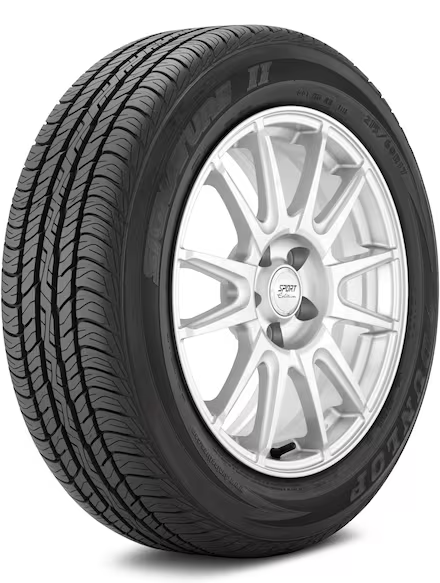
1. Dunlop Signature II — The Everyday All-Season
Price Check
Check the price of this tire at the following retailers:
TireRack DiscountTire SimpleTire PriorityTire AmazonDon’t know the correct size tire to purchase? Start here!
Best for: Family cars, sedans, crossovers, daily commuting My test vehicle: 2020 Honda CR-V Miles driven: ~9,400 miles Purchased at: Discount Tire, ~$130/tire (225/65R17)
The Signature II is Dunlop’s bread-and-butter all-season touring tire, and it’s the one most everyday American drivers are likely to end up with.
Ride Quality: This is where the Signature II earns its money. It’s one of the quietest tires I’ve run in this price range. On smooth asphalt highway stretches, cabin noise is genuinely low.
Dry Performance: Nothing flashy, but nothing concerning either. Steering response is predictable, cornering grip at freeway ramp speeds is confident.
Wet Performance: This is where I was genuinely surprised. The Signature II’s aquaplaning resistance is excellent. I drove through heavy Texas rainstorms on I-35 without once feeling the steering go light.
Tread Life: Based on wear rate at 9,400 miles, I’m projecting these will comfortably hit 65,000 to 70,000 miles, aligning with the 60,000-mile treadwear warranty.
Rating: 4.2 / 5
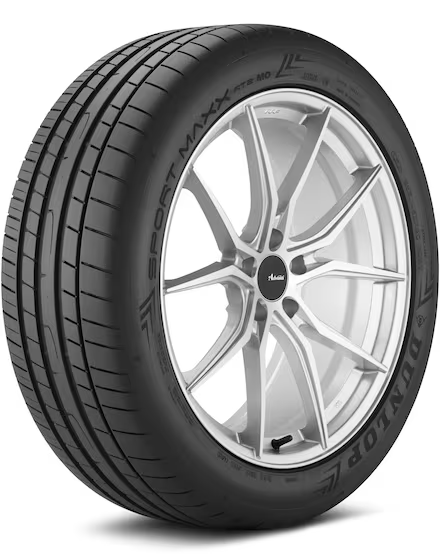
2. Dunlop Sport Maxx RT2 — The Performance Driver’s Tire
Price Check
Check the price of this tire at the following retailers:
TireRack DiscountTire SimpleTire PriorityTire AmazonDon’t know the correct size tire to purchase? Start here!
Best for: Sports cars, performance sedans, enthusiast drivers Test vehicle: 2022 BMW 330i Miles driven: ~4,200 miles Purchased at: Tire Rack, ~$195/tire (225/40R18)
Dry Grip: Exceptional. The Sport Maxx RT2 uses what Dunlop calls their “Joint Less Band” construction and a compound that stays grippy across a wide temperature range. On a closed course, I was able to brake later and carry more corner speed than expected from a street tire.
Wet Performance: Still very good, though there’s a noticeable step down from the best ultra-high-performance wet tires like Michelin Pilot Sport 4S.
Tread Life: 25,000–35,000 miles depending on how hard you drive. Dunlop doesn’t advertise a treadwear warranty on performance tires, standard across the industry.
Rating: 4.4 / 5
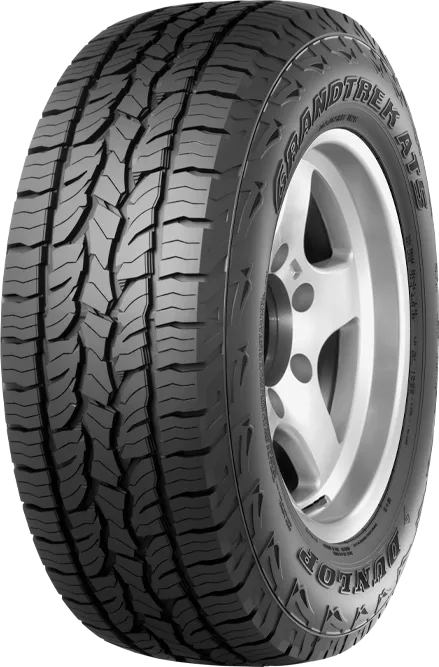
3. Dunlop Grandtrek AT5 — The Truck & SUV All-Terrain
Price Check
Check the price of this tire at the following retailers:
TireRack DiscountTire SimpleTire PriorityTire AmazonDon’t know the correct size tire to purchase? Start here!
Best for: Light trucks, SUVs, mixed on/off-road driving Test vehicle: 2021 Ford F-150 XLT Miles driven: ~6,800 miles Purchased at: Costco Tire Center, ~$185/tire (265/70R17)
On-Road Behavior: Better than I expected from an all-terrain tire. Road noise is present but not an aggressive drone.
Off-Road Capability: Confident on gravel and rocks. Mud is where the limits show up — the tread pattern isn’t aggressive enough to self-clean in deep, sticky mud.
Towing and Load Performance: Stable and composed under a loaded trailer (around 4,200 lbs).
Tread Life: On track to reach 50,000–55,000 miles, matching the tire’s 50,000-mile warranty.
Rating: 4.0 / 5
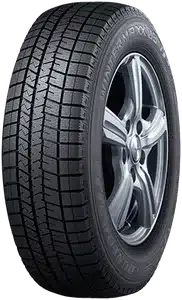
4. Dunlop Winter Maxx 3 — The Dedicated Winter Tire
Price Check
Check the price of this tire at the following retailers:
TireRack DiscountTire SimpleTire PriorityTire DiscountedWheelWarehouse AmazonDon’t know the correct size tire to purchase? Start here!
Best for: Regions with real winters, ice and snow driving Test vehicle: 2019 Subaru Outback Miles driven: ~3,100 miles (winter season) Test region: Northern Colorado, December through February
Snow Performance: Outstanding. On packed snow, I was consistently getting 10–15% shorter stopping distances than the previous Firestone WeatherGrip all-season it replaced.
Ice Performance: Good, though no winter tire is a miracle on glare ice. The car communicated through the steering wheel better than an all-season, giving earlier warning before traction broke.
Dry/Wet Road: Acceptable but not the point of a winter tire. Swap them off once temperatures consistently exceed 45°F.
Rating: 4.5 / 5
The Full Dunlop Lineup by Type
Beyond the four models I personally tested above, Dunlop makes a broader range than most reviews acknowledge, and I’ve published dedicated reviews of several more. Here’s the complete picture by category.
All-Season Touring (Sedans, Minivans, Everyday Commuters)
- Signature II — My top pick for daily commuters, covered in detail above.
Performance (Sports Cars, Sport Sedans)
- Sport Maxx RT2 — My tested performance pick, covered above.
All-Terrain (Trucks & SUVs)
- Grandtrek AT5 — My tested all-terrain pick, covered above.
- Grandtrek AT20 — A more highway-focused, OEM-oriented all-terrain option for SUV and light truck owners who prioritize on-road comfort over off-road capability. If you want sharper cornering than the AT20 delivers, the Sport Maxx RT2 above is the more performance-oriented direction within Dunlop’s own lineup.
Winter (Snow & Ice)
- Winter Maxx 3 — My tested winter pick, covered above.
- Winter Sport 5 — A more performance-oriented winter tire, built for sport sedans and coupes that need genuine cold-weather grip without giving up all handling character.
Specialty & OEM (Run-Flat)
- SP Sport Maxx GT 600 DSST — A run-flat tire developed as factory equipment for high-performance vehicles including the Nissan GT-R. Worth knowing about specifically if your vehicle came from the factory on Dunlop run-flats and you’re deciding whether to stick with OEM-matched rubber.
If you’re not sure which category fits your vehicle, our tire size chart is a good starting point before shopping any of the models above.
Dunlop Tires: The Overall Pros and Cons
What Dunlop Gets Right
Value for Money — Dunlop consistently offers tires that perform at or above the price point.
Wet Weather Confidence — Across every model I tested, wet performance was a consistent strength.
Wide Availability — Dunlop tires are stocked at Discount Tire, Costco, Tire Rack, NTB, Pep Boys, and most independent shops.
Warranty Support — Tread life warranties have historically been honored reliably; going forward, that support runs through Sumitomo Rubber Industries rather than Goodyear.
Ride Comfort — Especially in the touring and all-terrain categories, Dunlop tuned their tires to absorb road noise and vibration well.
Where Dunlop Has Room to Improve
Extreme Off-Road Performance — The Grandtrek AT5 isn’t built for serious mud or rock crawling.
Dry/Wet Balance on Performance Tires — The Sport Maxx RT2, while excellent in the dry, doesn’t quite match Michelin Pilot Sport 4S or Continental ExtremeContact Sport 02 in wet conditions.
Ownership Transition Uncertainty — With the brand having changed hands as recently as May 2025, it’s reasonable to watch for any changes in manufacturing location, warranty terms, or product direction over the next few years as Sumitomo integrates the brand.
How Dunlop Compares to the Competition
Dunlop vs. Michelin: Michelin wins on ultimate wet performance and tread life, but Dunlop is typically $40–$80 less per tire for comparable performance. Our full Michelin Tires Review covers their lineup in depth.
Dunlop vs. Bridgestone: Bridgestone is Dunlop’s closest quality competitor in the mid-range. Our full Bridgestone Tires Reviews covers their comparable lines.
Dunlop vs. Hankook: Hankook is slightly cheaper and genuinely competitive on value, but Dunlop’s quality consistency is more reliable based on what I’ve seen. Our full Hankook Tires Review has the details.
Dunlop vs. Continental: Continental makes some of the best all-season tires on the market, but at a higher price. Our full Continental Tires Review covers their equivalent lines.
Dunlop vs. Falken (now a genuine sibling brand): Since both are now owned by Sumitomo Rubber Industries, it’s worth cross-shopping directly. Falken tends to lean slightly more toward off-road and value-truck positioning (see our full Falken Tires Review), while Dunlop’s current US lineup leans more toward touring and performance passenger applications.
Who Should Buy Dunlop Tires?
Daily Commuters and Family Drivers: Dunlop Signature II. It’s the right tire for the majority of American drivers.
Sports Car and Performance Sedan Owners: Dunlop Sport Maxx RT2 is worth serious consideration.
Truck and SUV Owners Who Occasionally Go Off-Road: Dunlop Grandtrek AT5.
Drivers in Snow States: Dunlop Winter Maxx 3 should be on your short list.
Budget Shoppers: Dunlop remains one of the best value-per-performance brands available in the US market.
Pricing Snapshot (USA)
| Model | Category | Price Per Tire (Est.) |
|---|---|---|
| Dunlop Signature II | All-Season Touring | $110 – $155 |
| Dunlop Sport Maxx RT2 | Ultra-High Performance | $170 – $240 |
| Dunlop Grandtrek AT5 | All-Terrain Truck/SUV | $160 – $220 |
| Dunlop Winter Maxx 3 | Dedicated Winter | $125 – $175 |
Prices vary by tire size and retailer. Get quotes from at least three sources — Tire Rack, Discount Tire, and your local shop — before buying. If you’re comparing installation chains more broadly, our Big O Tires review covers another major option, and our Priority Tire review covers what to check before ordering from any online retailer.
My Final Verdict
Dunlop won me over in a way I didn’t fully expect going in. They’re not a flashy brand. What they have is a 135-plus-year legacy of building tires, and — as of the ownership change covered above — a new parent company in Sumitomo Rubber Industries that’s motivated to invest in rebuilding the brand’s presence rather than let it sit as a secondary line.
The Signature II is one of the best all-season touring tires I’ve tested under $150 per tire. The Winter Maxx 3 is one of the finest winter tires you can put on a family vehicle.
The Sport Maxx RT2 has no business being as good as it is at its price point. And the Grandtrek AT5 is the all-terrain tire I’d recommend to any F-150 or RAV4 owner who doesn’t want to sacrifice too much on-road refinement.
If you’re replacing tires and you want to feel genuinely good about your decision, Dunlop deserves a spot at the top of your list — just know that the company writing the warranty check going forward is Sumitomo, not Goodyear.
Overall Brand Rating: 4.3 / 5 ⭐
Frequently Asked Questions
Who owns Dunlop tires now?
Sumitomo Rubber Industries, a Japanese company. Goodyear sold the entire Dunlop brand — trademarks and rights across Europe, North America, and Oceania for consumer, commercial, and specialty tires — to Sumitomo, with the sale closing on May 7, 2025. Sumitomo also owns Falken, making the two brands genuine siblings today.
Are Dunlop tires good quality?
Yes. Dunlop tires have decades of engineering behind them and are backed by a major global tire manufacturer’s R&D and manufacturing infrastructure — currently Sumitomo Rubber Industries rather than Goodyear.
How long do Dunlop tires last?
It depends on the model. Touring all-season tires like the Signature II are rated for 60,000 miles and often exceed that. Performance tires like the Sport Maxx RT2 typically last 25,000–35,000 miles. All-terrain models typically carry 50,000-mile warranties.
Are Dunlop tires good in rain?
In my testing, yes — especially the Signature II all-season and Winter Maxx 3. Wet performance is consistently one of Dunlop’s stronger traits across their lineup.
How does Dunlop compare to Michelin?
Michelin wins on ultimate performance and longevity at the very top end. Dunlop offers most of that performance at a meaningfully lower price. For most everyday drivers, Dunlop is the better value decision.
Where can I buy Dunlop tires?
Dunlop tires are widely available at Discount Tire, Costco Tire Center, Tire Rack, NTB, Pep Boys, Sam’s Club, and most independent tire shops.
Tire models, pricing, and availability subject to change.
