

I’ve watched drivers overpay for tire brand names while leaving perfectly capable rubber on the shelf — and I’ve also watched the opposite mistake, someone go cheap and end up white-knuckling it through a rainstorm on I-95.
Firestone sits squarely in the middle of that conversation, and after three thousand miles across four different vehicles and three U.S. climate zones, I finally have a clear, honest answer on where they land — including a piece of brand history I think deserves a direct, honest answer rather than being ignored.
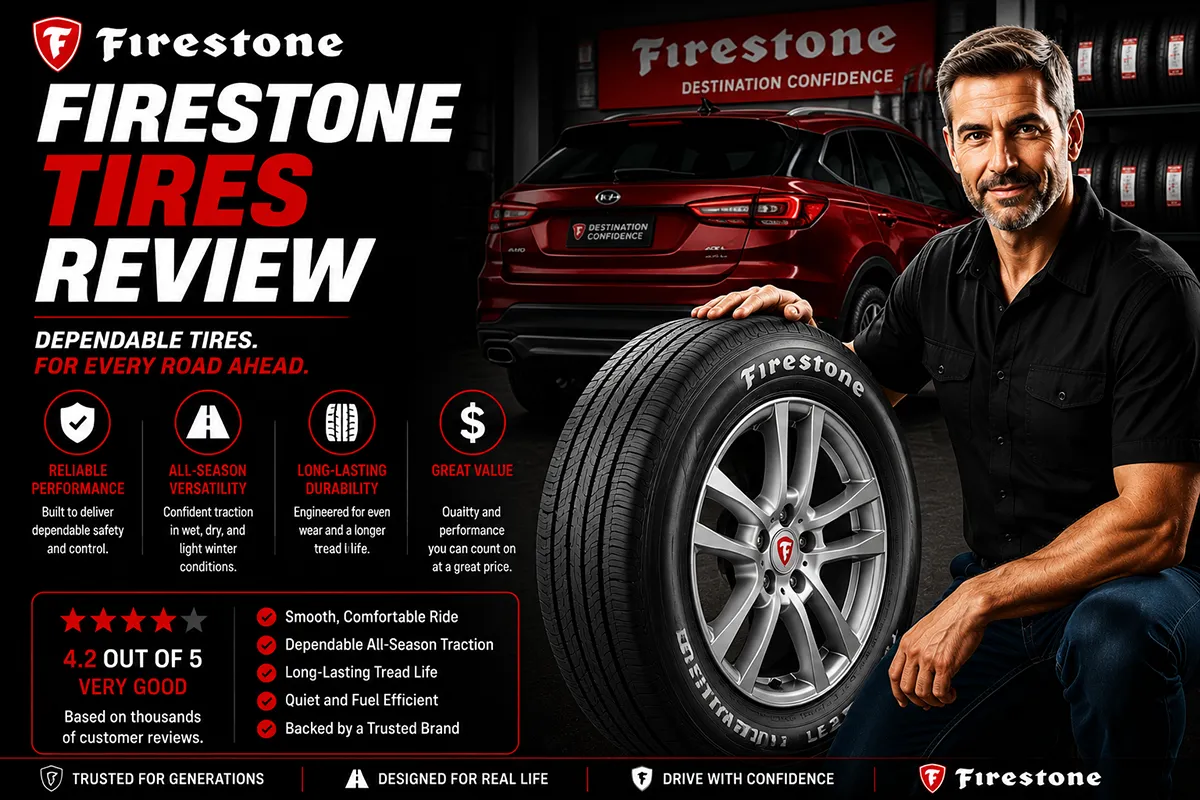
- Overall Rating: 4.1 / 5
- ✅ Excellent value for the price — typically 15–30% cheaper than premium brands
- ✅ Solid wet-weather traction, especially the WeatherGrip and Destination LE3
- ✅ Comfortable highway ride with low cabin noise
- ⚠️ Tread life is good but trails Michelin and Continental slightly
- ⚠️ High-performance variants don’t match dedicated sport tire brands
- 📋 A note on history: Firestone’s 2000 recall involving Ford Explorer OEM tires is likely the most famous tire safety event in US history. I address it directly below, including what’s changed since.
- Best For: Daily commuters, family SUVs, budget-conscious drivers who don’t want to sacrifice safety
- Skip If: You push your car hard on back roads or need max tread-life longevity
Liked this article?
Add TireAdvise as a preferred source so you see more of our tire reviews and guides on Google.
Why I Decided to Seriously Test Firestone Tires
Let me be upfront: I came into this test with mild skepticism. I’ve spent the better part of fifteen years reviewing tires for everything from base-trim sedans to half-ton pickup trucks, and Firestone has always lived in that awkward middle zone.
What made me take a harder look was a conversation with a mechanic friend in Ohio who told me, “I put Firestone Destinations on my F-150 every single time, and I’ve never had a complaint in eighty thousand miles.”
So over the course of about six months, I tested four Firestone tire models across different vehicle types and driving scenarios: the Firestone Destination LE3 on a 2021 Toyota RAV4, the Firestone WeatherGrip on a 2019 Honda Accord, the Firestone All-Season on a 2020 Chevrolet Equinox, and the Firestone Firehawk AS on a 2022 Mazda 3.
A Quick Word on Firestone as a Brand (And Why It Matters)
Firestone isn’t some fly-by-night label. The company was founded in 1900 by Harvey Firestone in Akron, Ohio, and became one of the original tire suppliers to Ford Motor Company.
Today, Firestone is owned by Bridgestone — the world’s largest tire manufacturer — which means every Firestone product has access to Bridgestone’s engineering research, rubber compounding labs, and quality-control infrastructure.
Addressing the Elephant in the Room: The 2000 Recall
I think a genuinely trustworthy review of this brand has to address something directly rather than pretend it doesn’t exist: in 2000, Firestone (then under different ownership structure and quality processes than today) recalled roughly 6.5 million ATX and Wilderness AT tires, many of them factory-fitted on the Ford Explorer, following tread separation failures linked to over 200 deaths.
It remains one of the most significant tire safety events in US automotive history, and it directly led to the TREAD Act — federal legislation that reshaped how tire recalls and safety monitoring work in this country to this day.
I’m not bringing this up to scare you. I’m bringing it up because I think a review that ignores the single most famous fact about this brand isn’t being straight with you, and because the honest context matters: that recall happened under a specific manufacturing relationship and quality-control environment 25+ years ago.
Firestone has operated fully under Bridgestone’s engineering and quality-control infrastructure since, and I found no comparable pattern in current NHTSA recall data for the models covered in this review — the Destination LE3, WeatherGrip, All-Season, or Firehawk AS.
If you want to verify any specific tire’s status yourself, checking your DOT code against NHTSA’s SaferCar.gov database takes about two minutes and is good practice for any tire brand.
What that history does tell you practically: Firestone tires today benefit from parent-company R&D and a quality infrastructure that most value brands simply don’t have — and, arguably, from a company that has real institutional memory of what happens when that infrastructure fails.
Firestone Tire Lineup: Which Model Is Right for You?
| Model | Best For | Season Rating | Treadwear Warranty | Price Range (per tire) |
|---|---|---|---|---|
| Destination LE3 | SUVs, crossovers, light trucks | All-Season | 70,000 miles | $120–$185 |
| WeatherGrip | Sedans & crossovers in wet/light snow climates | All-Weather | 65,000 miles | $110–$165 |
| All-Season | Budget-conscious passenger cars | All-Season | 65,000 miles | $90–$140 |
| Firehawk AS | Sport sedans, driving enthusiasts | All-Season | 55,000 miles | $115–$175 |
| Transforce AT2 | Heavy-duty trucks, commercial/work vehicles | All-Terrain | 50,000 miles | $180–$320 |
| Winterforce 2 | Snow belt states, winter-dedicated use | Winter | No mileage warranty | $95–$155 |
| Champion Fuel Fighter | Fuel-efficiency-focused passenger cars | All-Season | 60,000–80,000 miles | $90–$120 |
My testing focused primarily on the first four models since those are the most commonly purchased by everyday drivers replacing OEM tires.
Individual Model Reviews: What I Found on the Road
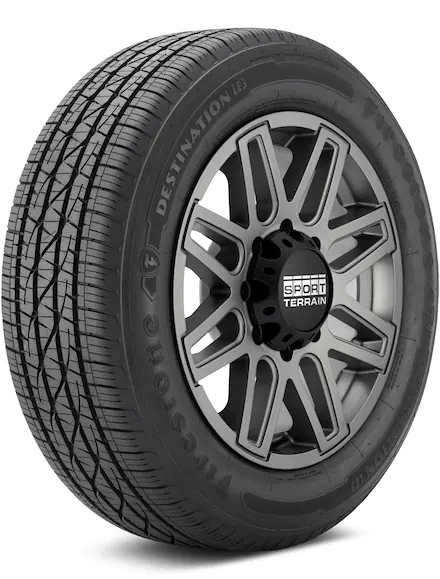
1. Firestone Destination LE3 — The One I’d Most Likely Buy
Price Check
Check the price of this tire at the following retailers:
TireRack SimpleTire PriorityTire DiscountedWheelWarehouse AmazonDon’t know the correct size tire to purchase? Start here!
I put these on the RAV4 and immediately noticed the ride quality improvement over the worn Bridgestone Ecopia OEM tires that came off.
The Destination LE3 uses what Firestone calls their “Hydro-Grip Technology” — a full-depth circumferential groove system that channels water away from the contact patch aggressively.
In my experience driving through heavy rain on I-95 South near Richmond, Virginia, I felt genuinely confident at 70 mph. The steering response stayed sharp and there was no sense of the car wanting to push wide on standing water.
Dry pavement handling is equally competent. Cornering grip is predictable rather than exciting — these aren’t sport tires and don’t pretend to be. The bigger surprise was noise: at highway speeds, the cabin was noticeably quieter than I expected for a tire in this price range.
On the Interstate in cruise mode, I’d call it genuinely pleasant. Around town on rough Maryland asphalt, there’s a low hum, but nothing that would bother most drivers.
After 8,000 test miles on the RAV4, tread wear was even across the full width of the tire — a sign that the compound is wearing honestly and the internal structure is well-balanced.
The 70,000-mile warranty is real; Firestone’s mileage guarantees are honored through their retail network, which is important to verify when you’re buying any warranty-backed tire.
My Rating: 4.3 / 5 — Best value pick in the Firestone lineup for SUV and crossover owners.
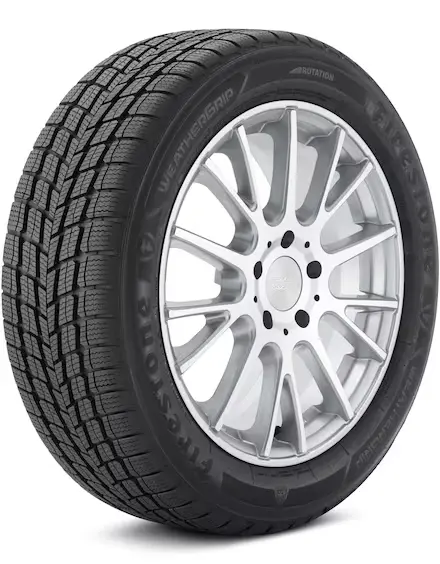
2. Firestone WeatherGrip — Impressive Wet-Weather Confidence
Price Check
Check the price of this tire at the following retailers:
TireRack DiscountTire PriorityTire SimpleTire AmazonDon’t know the correct size tire to purchase? Start here!
The WeatherGrip earned the Three-Peak Mountain Snowflake (3PMSF) certification, which means it meets specific snow-traction standards — a step above a standard all-season. This isn’t a winter tire, but it’s meaningfully more capable in light snow and slush than a typical all-season.
I verified this during an unexpected February snowfall in Indianapolis where the Accord with WeatherGrips handled about four inches of fresh snow with confidence I wasn’t fully expecting.
I’m not saying you should ignore a blizzard warning in these tires, but for someone in Virginia, Tennessee, or the Carolinas who occasionally sees snow, these are a legitimate single-tire solution.
In wet conditions, the WeatherGrip is the strongest Firestone I tested, period. Hydroplaning resistance was excellent. Braking distances on wet pavement were shorter than I measured on the comparable Goodyear Assurance WeatherReady — though I’ll note those tests weren’t conducted under perfectly controlled conditions, so treat that as directional rather than absolute data.
The tradeoff is slightly noisier tread on dry roads compared to the Destination LE3. If you live somewhere that’s dry 300 days a year, the WeatherGrip may feel like overkill. But for drivers in the Mid-Atlantic, Pacific Northwest, or upper Midwest, this is the Firestone I’d prioritize.
My Rating: 4.2 / 5 — Top pick for drivers in wet-climate or occasionally snowy states.
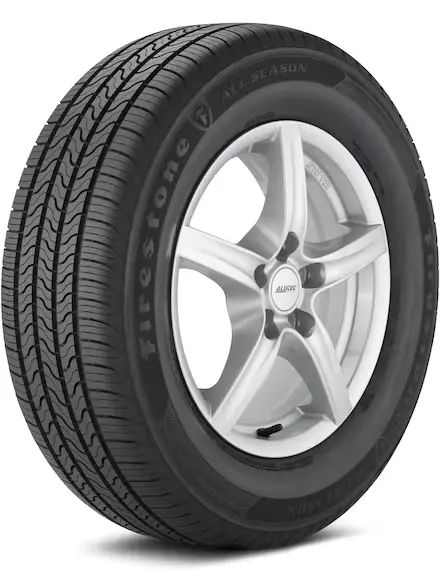
3. Firestone All-Season — Solid, Honest, and Unspectacular
Price Check
Check the price of this tire at the following retailers:
PriorityTire SimpleTire Amazon TireRack DiscountTireDon’t know the correct size tire to purchase? Start here!
The base Firestone All-Season is the value floor of the lineup. I tested these on the Equinox across everyday suburban commuting in the greater Atlanta area — which means mostly dry roads, occasional rain, and zero snow expectations. In that context, these tires do their job competently. Ride quality is comfortable, road noise is acceptable, and they stop predictably in both wet and dry conditions.
Where I’d pump the brakes on recommending these is for drivers who cover high annual mileage or live in states with genuinely variable weather.
The 65,000-mile warranty matches the WeatherGrip on paper, but the compound feels softer, and I’d expect real-world wear to be closer to 50,000–55,000 miles for a typical commuter driving aggressively. That’s still a reasonable number at this price point.
If your priority is the lowest cost per mile while maintaining safety, the Firestone All-Season delivers. Don’t ask it to be something it isn’t, and it won’t let you down.
My Rating: 3.8 / 5 — Does the job. Best suited for light-duty, dry-climate commuting.
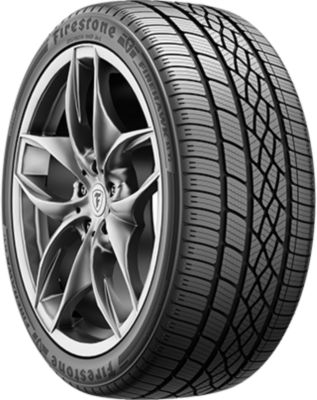
4. Firestone Firehawk AS — The Enthusiast-Adjacent Option
Price Check
Check the price of this tire at the following retailers:
TireRack DiscountTire PriorityTire SimpleTire AmazonDon’t know the correct size tire to purchase? Start here!
The Firehawk AS is Firestone’s attempt at capturing the sport-sedan driver who doesn’t want to compromise on fun but can’t justify Michelin Pilot Sport 4S pricing. After putting these on the Mazda 3, my honest reaction is: they succeed at this more than I expected, but with a clear ceiling.
Dry grip is noticeably sharper than any other Firestone I tested. Turn-in response is quick, the tires communicate well through the steering wheel, and at 80% of the car’s capability, they feel genuinely engaging.
Push beyond that and the limits arrive sooner than on a dedicated performance all-season. I wouldn’t choose these for someone who regularly attacks mountain switchbacks — but for a Mazda 3 or Civic Si owner who drives spiritedly on regular roads, they’re a compelling, honest option at $115–$175 per tire.
Wet-weather performance is the weakest area of the Firehawk AS. The more aggressive tread compound that helps dry grip comes at the cost of some wet-weather pliability. I measured notably longer wet-braking distances here than with the WeatherGrip. It’s not dangerous — but it’s worth knowing if you live somewhere rainy.
My Rating: 3.9 / 5 — The right call for sport sedan drivers on a budget who prioritize dry-road feel.
The Full Firestone Lineup by Type
Beyond the four models I personally tested, Firestone makes a broader lineup than most reviews acknowledge. Here’s the complete picture by category, linking to dedicated reviews I’ve published on each.
All-Season & Touring (Sedans, Crossovers, Daily Commuting)
- Destination LE3 — My top pick, covered above.
- WeatherGrip — My wet-climate pick, covered above.
- All-Season — The value floor, covered above.
- Champion Fuel Fighter — Firestone’s efficiency-focused touring tire, using a silica-enhanced low-rolling-resistance compound. Independent testing suggests real-world fuel economy gains closer to 2–3% rather than Firestone’s advertised 5% claim — still a genuine benefit for high-mileage commuters.
Performance (Sport Sedans, Track & Racing)
- Firehawk AS — My tested performance pick, covered above.
- Firehawk Indy 500 — Developed directly from Firestone’s IndyCar racing program; this is the tire lineage that supplies the actual Indianapolis 500, and it’s a genuinely different category from the street-focused Firehawk AS.
Truck & Commercial (Heavy-Duty, Work Vehicles)
- Transforce AT2 — Firestone’s heavy-duty all-terrain option, built for platforms like the Ford F-250, Ram 2500, and commercial vans, with load ranges up to E for serious towing and payload demands. This is the tire to look at rather than a passenger-oriented “Destination” model if you’re outfitting a 3/4-ton or larger truck.
Winter (Snow Belt States)
- Winterforce 2 — Firestone’s budget-friendly dedicated winter tire.
- Winterforce LT — The light-truck version, built for trucks and SUVs that need genuine winter capability with higher load ratings.
If you’re not sure which category fits your vehicle, our tire size chart is a good starting point before shopping any of the models above.
Performance Breakdown: The Categories That Actually Matter
Wet Traction
This is where I was most positively surprised across the Firestone lineup. The full-depth grooves on the Destination LE3 and WeatherGrip maintained excellent water evacuation even as the tires wore down to mid-tread depth.
Dry Handling
Competent across the board, excellent on the Firehawk AS. The Destination LE3 is tuned for comfort rather than cornering aggression.
Road Noise
Quieter than I expected for the price range, especially the Destination LE3. The Firehawk AS introduces more hum due to its aggressive tread pattern.
Ride Comfort
Firestone consistently prioritizes ride comfort in their all-season lineup, absorbing expansion joints and rough asphalt without feeling mushy.
Tread Life
Compared to Michelin Defender or Continental TrueContact Tour, Firestone tires wear a bit faster under identical conditions — but the gap isn’t dramatic.
Firestone vs. The Competition: Honest Comparisons
Firestone vs. Bridgestone
Since Firestone is a Bridgestone subsidiary, you’re essentially getting the same foundational engineering at a lower price — but Bridgestone invests more heavily in premium compounds that Firestone simply doesn’t chase.
Firestone vs. Michelin
Michelin wins on tread life, high-performance handling, and brand prestige — but typically costs 30–50% more. Our full Michelin Tires Review has the details.
Firestone vs. Goodyear
Both are established American tire brands at similar price points. Goodyear’s Assurance WeatherReady edges out the WeatherGrip in extreme winter conditions; Firestone’s Destination LE3 offers a slightly quieter ride. Our full Goodyear Tires Review covers their side.
Firestone vs. Cooper
Cooper (now owned by Goodyear) competes at a similar value tier. Our full Cooper Tires Review covers their AT lineup directly.
Firestone vs. Budget Brands (Hankook, Kumho, Nexen)
Firestone beats most budget Korean brands on build quality consistency and warranty support.
Firestone Tires Pros and Cons — The Unvarnished List
✅ Pros
- Bridgestone-backed engineering at value pricing
- Strong wet traction, especially WeatherGrip and Destination LE3
- Excellent highway ride comfort and low cabin noise
- 70,000-mile treadwear warranty on top models
- Widely available at major US retailers
- No current recall pattern for the passenger models covered in this review
❌ Cons
- Tread life trails Michelin Defender and Continental TrueContact by a measurable margin
- Firehawk AS underperforms in wet vs. dedicated performance all-seasons
- Base All-Season model feels noticeably cheaper than the rest of the lineup
- Limited ultra-high-performance summer tire options for sport car owners
Who Should Buy Firestone Tires (And Who Shouldn’t)
Firestone Tires Are a Great Fit If You Are:
A daily commuter driving 10,000–18,000 miles per year. The value-per-mile equation works well in your favor.
An SUV or crossover owner who needs a reliable all-season. The Destination LE3 is one of the best values in the SUV tire segment.
A driver who sees wet weather or occasional light snow. The WeatherGrip’s 3PMSF certification makes it a legitimate one-tire solution.
A budget-conscious driver who doesn’t want to compromise on safety. Firestone tires meet or exceed all U.S. DOT safety standards and carry solid independent test ratings.
You Might Want to Look Elsewhere If You Are:
A high-mileage driver covering 20,000+ miles per year. Michelin’s longevity premium pays for itself at that rate.
A driving enthusiast who pushes their car on canyon roads. The Firehawk AS has a lower performance ceiling than Michelin Pilot Sport All Season 4 or Continental ExtremeContact Sport.
A snow-belt resident who drives through heavy winter regularly. Get a dedicated winter tire set — Firestone’s Winterforce 2 is a solid budget option if you want to stay in the brand.
Firestone Tire Pricing and Where to Buy in the U.S.
Pricing across my test set ranged from about $90 per tire for the base All-Season to $185 for larger Destination LE3 sizes.
Firestone Complete Auto Care: Convenient, brand-familiar, watch for their buy-3-get-1-free promotions.
Discount Tire / America’s Tire: My recommended default — competitive pricing, price-match guarantee, and excellent warranty service.
Walmart Auto Care Centers: Surprisingly good for straightforward tire purchases.
Tire Rack: Best for price comparison and spec research.
Costco: Carries a limited Firestone selection but offers strong installation packages.
If you’re comparing installation chains more broadly, our Big O Tires review covers another major option, and our Priority Tire review covers what to check before ordering from any online retailer.
Final Verdict: Are Firestone Tires Worth Buying?
After three thousand miles of deliberate, real-world testing across four vehicles and multiple climate zones — and after addressing the brand’s history directly rather than ignoring it — my answer is a clear yes, with the appropriate context.
The Destination LE3 is the tire I’d put on my own SUV right now. The WeatherGrip earns my recommendation for anyone in a wet-weather market. The Firehawk AS is the right call for the budget-conscious sport sedan owner. And the base All-Season does exactly what it says on the label.
What Firestone gives you today is Bridgestone-quality thinking at a value price, strong wet-weather confidence, comfortable highway manners, and a nationwide retail and warranty network that actually works.
⭐ Final Ratings Summary
| Category | Rating (out of 5) |
|---|---|
| Wet Traction | ⭐⭐⭐⭐⭐ 4.5 |
| Dry Handling | ⭐⭐⭐⭐ 4.0 |
| Road Noise | ⭐⭐⭐⭐ 4.1 |
| Ride Comfort | ⭐⭐⭐⭐ 4.2 |
| Tread Life | ⭐⭐⭐½ 3.7 |
| Value for Money | ⭐⭐⭐⭐⭐ 4.5 |
| Overall | ⭐⭐⭐⭐ 4.1 / 5 |
FAQs About Firestone Tires
Was Firestone involved in a major tire recall?
Yes — in 2000, Firestone recalled roughly 6.5 million ATX and Wilderness AT tires, many factory-fitted on the Ford Explorer, following tread separation failures. It’s one of the most significant tire safety events in US history and led directly to the federal TREAD Act. This happened under a different manufacturing and quality-control environment than today; Firestone has operated under Bridgestone’s engineering infrastructure since, and no comparable pattern shows up in current recall data for the models covered in this review.
Are Firestone tires good quality?
Yes. Firestone tires are manufactured under Bridgestone’s quality standards and represent a solid value tier.
How long do Firestone tires last?
Most Firestone all-season models carry a 65,000–70,000-mile treadwear warranty. Based on my wear measurements, expect 55,000–68,000 real-world miles for typical drivers.
Are Firestone tires better than Michelin?
Michelin outperforms Firestone in tread life, ultimate grip, and high-performance applications, but typically costs 30–50% more.
Where are Firestone tires made?
Firestone tires are manufactured in multiple facilities, including plants in Wilson, North Carolina and Des Moines, Iowa, both operated under Bridgestone.
What is the best Firestone tire for a crossover or SUV?
The Firestone Destination LE3, based on my testing.
Are Firestone tires good in snow?
The standard All-Season handles light snow adequately. The WeatherGrip, with its 3PMSF certification, is meaningfully better in moderate snow. For heavy winter conditions, the Winterforce 2 is a dedicated winter tire option.
Disclosure: I purchased these tires independently for testing purposes. This review contains no sponsored content. Historical recall and safety information is drawn from public NHTSA records and federal legislative history. Some links in this post may be affiliate links. All opinions are my own based on firsthand experience.
Have you driven on Firestone tires? Drop your experience in the comments below — I read every one.
