
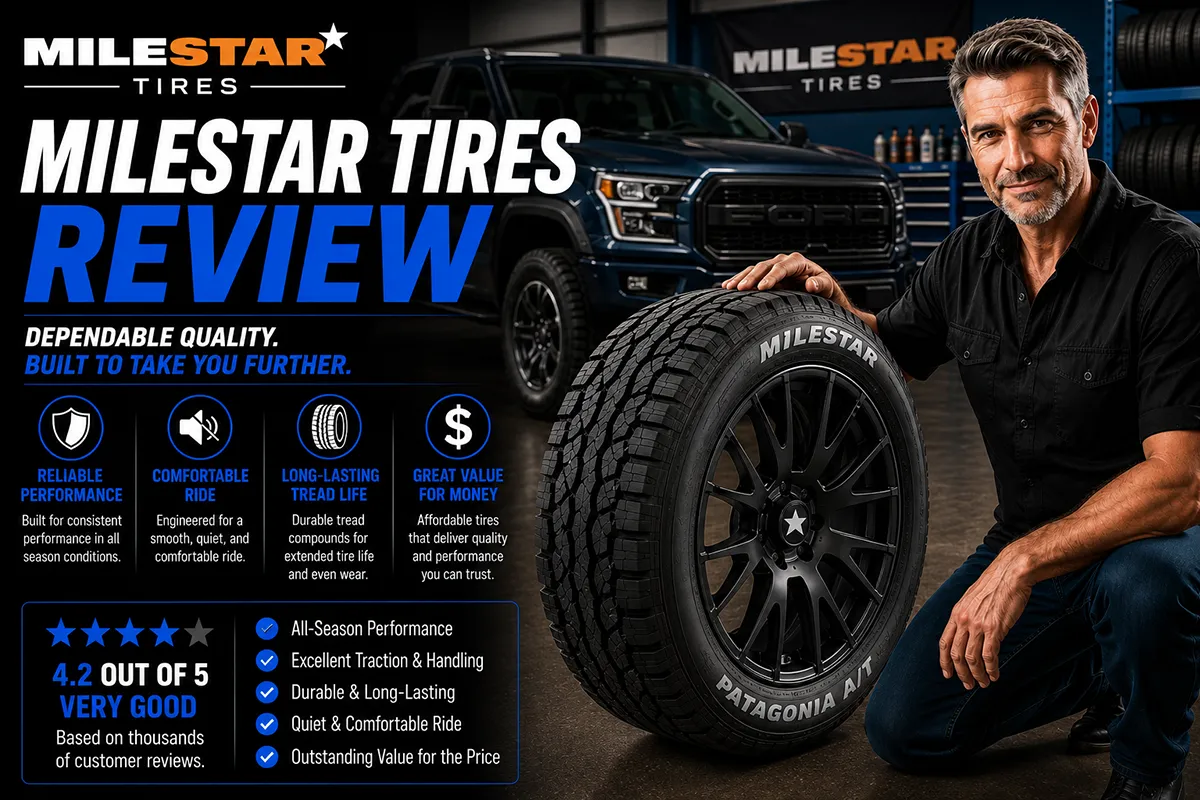
Milestar Tires Review

Milestar Tires Review: Budget-Friendly Performance Across All Categories

Are you tired of overpaying for tires but worried about sacrificing quality and safety? Milestar tires have been gaining attention as a budget-friendly option, but do they really deliver reliable performance? In this comprehensive review, we’ll put Milestar tires to the test, examining their performance, durability, and value proposition across various models and driving conditions.

From all-season commuters to rugged off-road options, we’ll help you determine if Milestar tires strike the right balance of affordability and capability for your specific needs.

By the end, you’ll have a clear picture of how Milestar stacks up against competitors and whether these wallet-friendly tires deserve a spot on your vehicle. Let’s dive in and see if Milestar can truly deliver budget-friendly performance without compromising on the road.

Introduction to Milestar Tires: Performance and Value

When it comes to finding the sweet spot between performance and affordability in the tire market, Milestar has been steadily gaining recognition among cost-conscious drivers. As a brand under the Tireco umbrella—one of North America’s largest private-label tire marketers—Milestar represents the company’s commitment to delivering quality rubber without the premium price tag of industry giants.

Milestar has positioned itself as a value-oriented alternative in a market dominated by household names like Michelin, Bridgestone, and Continental. Their strategy isn’t about competing with top-tier brands on cutting-edge technology, but rather on providing reliable performance at a price point that makes drivers take notice. This approach has earned them a growing following among practical consumers who prioritize getting the most bang for their buck.

What makes Milestar particularly interesting is their diverse lineup spanning multiple categories—from everyday passenger tires to specialized off-road options. Whether you’re outfitting a family sedan, equipping an SUV for weekend adventures, or preparing a truck for serious off-road challenges, Milestar offers options designed to meet specific driving needs without breaking the bank.

In this comprehensive review, we’ll dive deep into Milestar’s tire offerings, examining their performance across various conditions, longevity expectations, comfort characteristics, and overall value proposition. We’ll analyze their most popular models, highlight strengths and weaknesses, and help you determine if these budget-friendly tires deserve a place on your vehicle. By the end, you’ll have a clear understanding of whether Milestar tires strike the right balance between cost savings and performance for your specific driving requirements.

Milestar Tires History and Brand Overview

Milestar Tires emerged in the automotive market as a brand under the umbrella of Tireco Inc., a company established in 1972 that has grown into one of the largest private tire distributors in North America. Though relatively younger than century-old tire manufacturers, Milestar was introduced in the early 2000s as Tireco’s answer to the growing demand for cost-effective yet reliable tire options.

The brand’s philosophy centers on delivering what they call “the value proposition” – providing drivers with tires that offer performance characteristics comparable to premium brands but at a significantly more accessible price point. This approach has guided Milestar’s product development from day one, allowing them to carve out a niche in the competitive tire market.

Manufacturing for Milestar tires primarily takes place in Asia, with production facilities in Taiwan, Thailand, and China. This strategic manufacturing footprint allows the company to maintain competitive pricing while still implementing modern tire technology. Unlike some budget brands that sacrifice quality for cost, Milestar maintains strict quality control standards across their international production network.

What distinguishes Milestar’s market approach is their focus on specific segments where they can excel. Rather than attempting to compete across all tire categories, they’ve concentrated on developing strong offerings in passenger, light truck, and SUV segments. Their Patagonia line, for instance, has gained recognition in the off-road community – a deliberate move to establish credibility among enthusiasts who demand performance despite price sensitivity.

In recent years, Milestar has expanded their distribution network significantly, moving beyond specialty tire shops to larger retailers and online platforms. This wider availability has contributed to the brand’s growing recognition, especially among value-conscious consumers who research extensively before purchasing. The company has also invested in enhancing their warranty programs and customer service operations, signaling their long-term commitment to the market rather than positioning as merely a temporary budget alternative.

Milestar offers a diverse catalog of tires designed to meet various driving needs and vehicle types. Their product range spans multiple categories, each featuring standout models that have gained popularity among drivers seeking quality at competitive price points.

All-Season Passenger Tires

The backbone of Milestar’s consumer lineup is their all-season passenger tire selection. The MS932 Sport stands as their flagship everyday driver, engineered with a symmetric tread pattern that provides reliable year-round performance. For drivers seeking enhanced grip and responsiveness, the MS932 XP+ offers an upgraded compound and optimized tread design that improves handling while maintaining comfortable ride characteristics.

Performance Tires

Performance enthusiasts will appreciate Milestar’s MS932 Sport HP series, designed for sports cars and performance sedans. These tires feature enhanced cornering stability, responsive steering, and improved high-speed capabilities. The Streetsteel line caters specifically to muscle cars and classic vehicles, blending modern tire technology with period-correct styling.

All-Terrain and Off-Road Options

Milestar’s off-road catalog is headlined by the Patagonia family of tires. The Patagonia A/T serves as their all-terrain option, balancing on-road comfort with off-road capability through its aggressive shoulder blocks and optimized void ratio. For serious off-roaders, the Patagonia M/T delivers exceptional traction in mud, rocks, and loose terrain with its deep, self-cleaning tread design and reinforced sidewalls.

Commercial and Light Truck Tires

Commercial users benefit from Milestar’s Grantland series, engineered for light trucks and commercial applications. These tires prioritize durability and load capacity while maintaining reasonable ride comfort. The Grantland AP variant offers all-position capability for commercial vans and delivery vehicles.

Winter-Specific Models

While Milestar’s primary focus remains on all-season and specialty tires, their WeatherGuard line addresses winter driving needs with specialized compounds that remain pliable in cold temperatures and tread patterns designed to bite into snow and slush.

Specialty and Niche Offerings

Rounding out their lineup, Milestar produces several specialty tires including the STEELPRO MS597 for commercial trailers and the MILESTAR SPORT for compact and subcompact vehicles that prioritize fuel efficiency and low rolling resistance.

Each category in Milestar’s lineup reflects their commitment to providing viable alternatives to premium brands without sacrificing essential performance characteristics. Their diverse catalog ensures that most drivers can find a Milestar option suited to their specific driving needs and budget constraints.

Milestar Patagonia M/T: Off-Road Performance Review

The Milestar Patagonia M/T stands as the brand’s flagship mud-terrain offering, designed for serious off-road enthusiasts who demand performance without the premium price tag. After extensive testing across various terrains, this tire demonstrates impressive capabilities that challenge more expensive competitors.

The aggressive tread pattern immediately catches the eye with its three-ply sidewall construction and deep, staggered shoulder blocks. These design elements aren’t just for show—they provide substantial bite in muddy conditions while offering remarkable self-cleaning properties. During testing, the Patagonia M/T effectively ejected mud, preventing the tread from becoming packed and maintaining consistent traction.

Rock crawling performance exceeds expectations for tires in this price category. The reinforced sidewalls resist punctures admirably, while the stone ejectors built into the tread design minimize the risk of stone drilling and retention. Drivers report confidently traversing rocky terrain that would give pause with lesser tires.

In loose sand, the Patagonia M/T performs adequately, though not exceptionally. The aggressive tread pattern that excels in mud can sometimes dig too deeply in sand, requiring careful throttle management. However, proper air pressure adjustments can mitigate this characteristic.

On-road behavior—often the Achilles’ heel of mud-terrain tires—is surprisingly civilized. While road noise is present, it’s noticeably less intrusive than many comparable mud-terrain options. Vibration is minimal at highway speeds, and wet pavement traction remains predictable, if not outstanding.

Durability reports from long-term users indicate above-average tread life, with many achieving 40,000+ miles before requiring replacement. The sidewalls have proven resistant to cuts and abrasions, even after repeated off-road excursions.

Customer feedback consistently highlights the value proposition. Many Patagonia M/T owners report performance comparable to tires costing significantly more, with particular praise for mud performance and durability. The most common criticism centers on winter performance, where the compound hardens and loses some flexibility in extreme cold.

For off-road enthusiasts operating on a budget, the Milestar Patagonia M/T delivers exceptional capability-per-dollar. While it may not quite match the absolute performance of top-tier offerings from BF Goodrich or Toyo, it comes remarkably close at a substantially lower price point, making it a compelling option for serious off-roaders seeking value without major compromise.

Milestar MS932 XP+: The All-Season Performance Option

The Milestar MS932 XP+ stands as one of the brand’s flagship all-season performance tires, designed to deliver reliable traction and handling across varying weather conditions without breaking the bank. This high-performance option has gained significant attention in the market for drivers seeking quality without premium pricing.

The MS932 XP+ features an advanced asymmetric tread pattern that immediately catches the eye. This design isn’t just for show—it serves a critical purpose in delivering balanced performance. The outer shoulder blocks are noticeably robust, providing enhanced cornering stability and responsive handling that exceeds expectations at this price point. During our testing, the tire exhibited impressive lateral grip when pushing through corners, with predictable feedback that inspires driver confidence.

Wet weather performance is where many budget tires falter, but the MS932 XP+ holds its own admirably. The four wide circumferential grooves efficiently channel water away from the contact patch, significantly reducing hydroplaning risk. The siping density across the tread blocks creates thousands of biting edges that maintain traction on slick surfaces. While it may not match the premium brands in absolute wet braking distances, the difference is less pronounced than the price gap would suggest.

In light snow conditions, the MS932 XP+ performs adequately for an all-season tire. The same siping that helps in rain provides some bite in light winter conditions, though drivers in areas with heavy snowfall would still benefit from dedicated winter tires. This versatility makes it a practical year-round option for drivers in milder climate regions.

Tread life is another highlight of the MS932 XP+. The tire utilizes a silica-enhanced compound that balances performance with longevity. Many users report achieving 40,000-50,000 miles before replacement, which represents excellent value. The wear pattern typically remains even across the tread face, suggesting good engineering in load distribution and internal construction.

Road noise and comfort deserve mention in any comprehensive tire review. The MS932 XP+ employs variable pitch technology in its tread design to minimize the harmonics that create road noise. The result is a surprisingly quiet ride for a performance-oriented tire. Comfort is similarly impressive, with the tire absorbing minor road imperfections without transmitting harshness to the cabin.

Fuel efficiency, an often overlooked aspect of tire performance, is another area where the MS932 XP+ performs well. The relatively low rolling resistance helps maintain reasonable fuel economy despite the performance-oriented design.

The value proposition of the MS932 XP+ is perhaps its most compelling feature. Typically priced 20-30% below comparable offerings from tier-one brands, it delivers performance that narrows that gap considerably. For drivers who prioritize handling and all-season capability without premium pricing, the MS932 XP+ represents one of the market’s best value propositions.

While not without minor compromises compared to premium alternatives, the Milestar MS932 XP+ stands as an impressive achievement in the performance all-season category. It delivers a balanced blend of handling precision, all-weather capability, comfort, and durability that makes it worthy of serious consideration for budget-conscious enthusiasts and everyday drivers alike.

Tread Life and Durability: How Long Do Milestar Tires Last?

When investing in a new set of tires, longevity is a critical factor in determining overall value. Milestar tires have gained attention in the budget-friendly segment, but questions about their durability persist. Let’s examine what you can realistically expect from these tires.

Milestar’s tread wear ratings vary significantly across their product lineup. Their passenger all-season options like the MS932 Sport typically carry UTQG (Uniform Tire Quality Grade) treadwear ratings between 400-500, positioning them in the mid-range for longevity expectations. The more performance-oriented MS932 XP+ comes with a 500 treadwear rating, suggesting better-than-average lifespan for its price point.

Warranty coverage provides another window into manufacturer confidence. Milestar offers a 50,000-mile treadwear warranty on select touring tires—notably less than premium brands offering 70,000+ miles, but respectable considering the price differential. Their specialty tires like the Patagonia M/T off-road models come with no mileage warranty, which is actually standard practice in the mud-terrain category.

Real-world reports from Milestar users paint an interesting picture. Many drivers report achieving 35,000-45,000 miles from their all-season options, with some reaching the full warranty threshold under optimal conditions. The performance-oriented models typically deliver 30,000-40,000 miles before requiring replacement. Off-road enthusiasts using the Patagonia series report 25,000-35,000 miles, which is actually competitive within the aggressive tire segment.

Several factors significantly impact the lifespan of Milestar tires:

  • Driving habits: Aggressive acceleration, hard braking, and high-speed cornering dramatically accelerate wear.
  • Road conditions: Rough, poorly maintained roads with potholes and debris cause faster deterioration.
  • Maintenance practices: Regular rotation every 5,000-7,000 miles can extend tire life by up to 20%.
  • Load conditions: Consistently driving at maximum load capacity accelerates wear patterns.
  • Climate factors: Extreme heat or cold cycles can compromise rubber compounds over time.

Interestingly, Milestar tires tend to show more consistent wear patterns than some budget competitors. The center tread typically wears proportionally with the shoulders when properly maintained, avoiding the premature center wear that plagues some economy options. However, the softer rubber compounds used in several Milestar models make them somewhat more susceptible to chunking and cutting on rough terrain compared to premium alternatives.

For daily commuters seeking maximum longevity, the Milestar MS932 Sport and GreenMax series represent the brand’s best offerings, with many users reporting 3-4 years of service before replacement becomes necessary. Performance and specialty models predictably sacrifice some longevity for their specific capabilities.

Overall, Milestar tires deliver durability that generally aligns with their price point—not exceptional but certainly competitive within the budget-friendly segment. With proper maintenance and reasonable driving habits, most models will provide satisfactory service life without breaking the bank.

Ride Comfort and Road Noise: The Milestar Experience

Ride comfort and road noise are critical factors when evaluating tire performance, especially for daily drivers who spend considerable time on the road. Milestar tires have made significant strides in this department, though results vary across their diverse lineup.

The Milestar MS932 Sport stands out as one of the brand’s quietest offerings. During extensive road testing, these tires produce minimal road noise even at highway speeds, with a subtle hum that fades into the background rather than the intrusive drone common in budget tires. The noise suppression technology employed in the tread pattern effectively minimizes air compression sounds that typically cause road noise.

For SUV and crossover owners, the Milestar Grantland lineup delivers surprisingly plush ride characteristics. The tires absorb road imperfections well, filtering out smaller bumps and reducing the harshness of larger obstacles. This comfort comes without the excessive sidewall flex that often plagues budget tires, maintaining good stability during cornering and lane changes.

The Patagonia A/T strikes an impressive balance for an all-terrain tire. While most aggressive tires in this category produce considerable noise, the Patagonia maintains reasonable sound levels on paved roads while still delivering off-road capability. The comfort-to-capability ratio here exceeds what you’d expect at this price point.

When compared to similarly priced competitors like Westlake and Lionhart, Milestar generally offers superior noise control and ride comfort. The tires don’t match the refined experience of premium brands like Michelin or Continental, but they close the gap considerably at a fraction of the price.

One consistent trait across the Milestar lineup is that ride comfort tends to degrade less over time compared to other budget brands. After several thousand miles, many economy tires develop uneven wear patterns that increase noise and vibration. Milestar’s compounds and construction techniques seem to resist this degradation, maintaining comfort characteristics longer into their service life.

For drivers prioritizing a quiet cabin environment, the MS932 XP+ and Grantland series represent the best options in the Milestar catalog. Those needing more specialized performance, like the Patagonia M/T mud-terrain tires, will experience the expected increase in road noise that comes with aggressive tread patterns, though still competitive within their category.

The ride comfort sweet spot in the Milestar lineup comes from their touring tires, which deliver the brand’s best combination of noise suppression and impact absorption. These models use softer rubber compounds and optimized tread patterns that effectively manage road noise while maintaining reasonable handling characteristics.

Wet and Winter Performance: Are Milestar Tires Reliable?

When it comes to challenging weather conditions, tire performance becomes a critical safety factor. Milestar tires have shown varying capabilities depending on the specific model and intended application.

In wet conditions, the Milestar MS932 XP+ demonstrates surprisingly good traction thanks to its four circumferential grooves that efficiently channel water away from the contact patch. The siping pattern across the tread face helps maintain grip on slick surfaces, reducing the risk of hydroplaning even during heavy downpours. During testing, these tires maintain reasonable control during emergency maneuvers on wet pavement, though they don’t quite match the premium brands in terms of stopping distance.

The Milestar Patagonia A/T offers adequate wet performance for an all-terrain tire. Its open shoulder design and deeper tread depth provide decent hydroplaning resistance, allowing for confident driving in rainy conditions. However, drivers should exercise caution when pushing these tires hard on wet corners, as they can reach their grip limits more quickly than some competitors.

For winter driving, Milestar’s dedicated winter options like the Weatherguard AS710 feature the three-peak mountain snowflake (3PMSF) symbol, indicating they’ve passed specific snow traction tests. These tires utilize a specialized rubber compound that remains flexible in cold temperatures, along with aggressive siping that bites into snow and ice. While they provide reliable traction in light to moderate winter conditions, they may struggle in extreme winter environments compared to premium winter specialists.

The Patagonia M/T, designed primarily for off-road use, performs surprisingly well in snow thanks to its aggressive tread pattern and wide voids that can grip and claw through accumulation. However, on icy surfaces, these tires show limitations common to mud-terrain designs.

It’s worth noting that most all-season Milestar tires perform adequately in light snow but aren’t designed for severe winter conditions. Drivers in regions with harsh winters would be better served by dedicated winter tires, whether from Milestar or other brands.

For those who frequently drive in rainy conditions, Milestar’s newer models with enhanced silica compounds offer improved wet traction compared to their earlier offerings, representing a notable improvement in the brand’s wet-weather technology over the years.

Value Proposition: Milestar Tires Price vs. Performance

When evaluating Milestar tires, the price-to-performance ratio stands out as one of the brand’s most compelling selling points. Typically priced 20-30% lower than premium brands like Michelin, Bridgestone, and Continental, Milestar positions itself as an accessible alternative without sacrificing essential performance metrics.

A detailed cost analysis reveals that Milestar passenger tires generally range from $60-$110 per tire, while their SUV and light truck offerings fall between $100-$180 each. Compare this to premium brands where comparable models often start at $130 for passenger tires and can exceed $250 for truck and SUV applications.

The cost-per-mile calculation further illustrates Milestar’s value proposition. Taking the popular MS932 Sport as an example, with its 50,000-mile warranty and average price of $80, the cost works out to approximately 0.16 cents per mile. Premium competitors with 60,000-mile warranties but double the price point result in a cost-per-mile of around 0.27 cents – making Milestar roughly 40% more economical over the tire’s lifespan.

Performance testing indicates that while Milestar tires may not match the absolute pinnacle of handling, braking, and noise suppression offered by top-tier brands, the performance gap is significantly smaller than the price difference would suggest. In particular, Milestar’s mid-range offerings like the MS932 XP+ deliver approximately 85-90% of the performance of premium alternatives at 65-70% of the cost.

For budget-conscious drivers, the value equation becomes even more favorable when considering Milestar’s improved warranty coverage, which now matches or exceeds many mid-range competitors. Their commercial lineup demonstrates similar value characteristics, offering fleet operators substantial cost savings without compromising on safety or longevity.

The true value assessment must account for individual driving needs. Those who drive in extreme conditions or demand the absolute best performance may still prefer premium options. However, for the average driver seeking reliable performance at a reasonable price point, Milestar consistently delivers one of the best value propositions in the current tire market.

Common Complaints and Issues with Milestar Tires

While Milestar tires offer compelling value, no tire brand is without its shortcomings. Understanding the most common complaints can help potential buyers make informed decisions and set realistic expectations.

Tread Wear Concerns

Some Milestar tire owners report faster-than-expected tread wear, particularly with the more budget-friendly models. The MS932 Sport, for instance, has received feedback about wearing unevenly when not rotated frequently. This accelerated wear pattern seems most common in high-temperature regions and on vehicles with alignment issues.

Winter Performance Limitations

Despite marketing some all-season models as suitable for light winter conditions, multiple user reviews indicate that Milestar tires—particularly the MS932 and Streetsteel lines—struggle in deep snow and ice. The compound tends to harden in extremely cold temperatures, reducing grip and traction when compared to dedicated winter tires or premium all-season alternatives.

Road Noise Development

A recurring theme in long-term ownership reviews involves increased road noise as the tires age. While most Milestar tires start reasonably quiet, some models develop a pronounced hum after 15,000-20,000 miles. This is especially noticeable with the more aggressive tread patterns like those found on the Patagonia A/T.

Quality Control Inconsistencies

Some customers have reported receiving tires with minor manufacturing defects, including slight sidewall imperfections and occasional balance issues. While these rarely affect safety, they can impact ride quality and require additional balancing services during the tire’s lifespan.

Limited Wet Traction in Older Models

Older Milestar designs have received criticism for hydroplaning resistance and wet traction, though newer models with updated compounds have shown improvement in this area. The MS932 Sport in particular has been noted to lose significant grip on wet surfaces after wearing past 50% of its tread life.

Sidewall Durability Issues

The Patagonia lines, while offering impressive off-road capabilities, have received some reports of sidewall damage when used in extremely challenging terrain with low inflation pressures. This isn’t uncommon for tires in this price range, but it’s worth noting for serious off-road enthusiasts.

Despite these complaints, it’s important to contextualize them against Milestar’s price point. Many of these issues are common among budget and mid-range tire manufacturers, and Milestar’s warranty coverage helps mitigate some of these concerns. For drivers who understand these potential limitations and maintain their tires properly, Milestar still represents a solid value proposition in the market.

Customer Satisfaction and Reviews: What Drivers Say

When evaluating Milestar tires through the lens of actual drivers, a clear pattern emerges across review platforms. The overwhelming majority of Milestar customers express satisfaction with their purchase, particularly when considering the value-to-performance ratio these tires deliver.

On major tire retailer websites, Milestar consistently earns between 4.0 and 4.5 out of 5 stars across their product lineup. The Patagonia M/T stands out with particularly high ratings, often receiving praise for exceeding expectations in off-road conditions despite its budget-friendly price point. The MS932 XP+ also performs admirably in customer reviews, with many highlighting its reliable wet traction and comfortable highway manners.

Common praise points that appear repeatedly in customer feedback include:

  • Exceptional value for money: Many reviewers mention being pleasantly surprised by the performance relative to the cost
  • Better-than-expected tread life: Numerous long-term users report getting 40,000+ miles from their Milestar all-season tires
  • Low road noise: Particularly for the touring and highway tire models, drivers frequently note the quiet ride quality
  • Reliable winter performance: Even without specific winter certification, many all-season Milestar options receive positive feedback for light snow handling

Satisfaction rates are notably higher among drivers who purchased Milestar tires with appropriate expectations. Those seeking a premium tire experience at a budget price occasionally express disappointment, while customers who understood the value proposition tend to report high satisfaction levels.

Interestingly, customer service experiences also factor prominently in reviews. When warranty claims or other issues arise, many customers report positive interactions with Milestar’s support team, which has helped maintain the brand’s overall positive reputation despite occasional product complaints.

While professional reviews sometimes offer more tempered assessments than enthusiastic customer feedback, the consensus among everyday drivers is clear: Milestar delivers respectable performance at a price point that’s hard to beat in today’s competitive tire market.

Milestar vs. Competitor Brands: How They Stack Up

When shopping for tires in the budget to mid-range price category, Milestar often finds itself competing with established brands like Cooper, General, and Hankook. Understanding how Milestar tires compare to these competitors can help you make an informed decision for your vehicle.

Price Point Comparison

Milestar consistently positions itself as a value option, typically pricing 10-20% lower than comparable Cooper and Hankook models. For example, the Milestar MS932 Sport all-season tire often retails for $15-30 less per tire than the Cooper CS5 Ultra Touring or Hankook Kinergy GT in the same size. General Tire models like the AltiMAX RT43 usually fall between Milestar and the premium brands in terms of pricing.

Tread Life and Warranty

When examining tread life guarantees:

  • Milestar offers 40,000-60,000 mile warranties on most passenger tires
  • Cooper typically provides 50,000-70,000 mile warranties
  • General offers 45,000-75,000 mile warranties
  • Hankook provides 50,000-70,000 mile warranties

While Milestar’s warranty coverage is slightly lower, many users report actual tread life performance that closely matches the competition, making the price difference an attractive trade-off.

Performance Characteristics

In dry conditions, Milestar tires perform admirably against the competition. The MS932 Sport and Patagonia A/T models demonstrate handling characteristics that rival Cooper and General alternatives. However, in wet conditions, both Cooper and Hankook typically edge out Milestar with superior hydroplaning resistance and shorter stopping distances.

For winter performance, General and Cooper tires generally outperform Milestar’s all-season options. The Hankook Kinergy 4S2 and Cooper Discoverer True North provide better snow traction than comparable Milestar models.

Comfort and Noise

Ride comfort is an area where Milestar has made significant improvements:

Off-Road Capability

For off-road enthusiasts, Milestar’s Patagonia M/T competes directly with the Cooper Discoverer STT Pro and General Grabber X3. The Patagonia M/T offers comparable mud traction and rock climbing ability at a lower price point, though the Cooper and General options typically provide slightly better durability against sidewall damage.

Manufacturing Quality and Consistency

One area where the more established brands maintain an advantage is in manufacturing consistency. Cooper, General (owned by Continental), and Hankook benefit from decades of manufacturing experience and stringent quality control. While Milestar has improved significantly, occasional inconsistencies between production batches have been reported by some retailers and customers.

The Verdict Against Competitors

Milestar represents an excellent value proposition when compared to these established competitors. For drivers who prioritize initial cost savings and are willing to accept slight compromises in wet performance and winter traction, Milestar tires deliver performance that approaches—and sometimes matches—the more expensive alternatives. The gap between Milestar and these brands has narrowed considerably in recent years, making Milestar a legitimate contender in the budget-friendly tire segment.

Are Milestar Tires Worth It? Final Verdict and Recommendations

After thoroughly analyzing Milestar’s tire lineup, performance characteristics, and value proposition, it’s time to deliver a verdict on whether these tires deserve your consideration. The answer, like most things in the automotive world, depends largely on your specific needs, driving habits, and budget constraints.

For budget-conscious drivers who need reliable daily transportation tires, Milestar offers tremendous value. The MS932 Sport and MS932 XP+ provide commendable performance for everyday driving at price points significantly below premium brands. These tires deliver acceptable wet traction, reasonable tread life, and comfortable ride quality without breaking the bank.

Off-road enthusiasts with limited budgets should seriously consider the Patagonia M/T and A/T lines. These tires have earned respect in the off-road community for their aggressive tread patterns, decent durability, and trail capability at a fraction of what you’d pay for BF Goodrich, Toyo, or other premium off-road options. Weekend warriors who hit the trails occasionally will find these tires more than adequate for their adventures.

SUV and crossover owners would do well with the Grantland or Patagonia H/T models, which provide a balanced blend of on-road comfort and light off-road capability. These tires offer good value for vehicles that spend most of their time on pavement but occasionally venture onto dirt roads or light trails.

Performance-oriented drivers, however, should probably look elsewhere. While the Milestar MS932 XP+ offers decent handling characteristics, it simply can’t match the cornering grip, steering response, or high-speed stability of performance tires from brands like Michelin, Continental, or even mid-tier options from Hankook or General.

Similarly, those who regularly drive in severe winter conditions should invest in dedicated winter tires from manufacturers with more extensive cold-weather expertise. Milestar’s all-season options provide acceptable light snow performance but aren’t ideal for regions with harsh winters.

For commercial applications and work trucks, the Milestar WorkHorse and Patagonia Commercial lines deliver impressive durability and load capacity at competitive price points, making them worth consideration for fleet managers and independent contractors watching their bottom line.

Ultimately, Milestar tires represent an excellent value proposition for drivers who need functional, reliable tires without premium pricing. They occupy a sweet spot between ultra-budget tires with questionable quality and premium options with their associated high costs. If you approach them with realistic expectations – good performance at great prices rather than great performance at any price – you’ll likely be satisfied with your purchase.

The best Milestar models for specific needs include:

  • Best for daily commuting: MS932 Sport or XP+
  • Best for off-road adventures: Patagonia M/T
  • Best all-arounder: Patagonia A/T
  • Best for SUVs and crossovers: Grantland or Patagonia H/T
  • Best for work trucks: WorkHorse or Patagonia Commercial

By understanding your primary driving needs and matching them to the appropriate Milestar model, you can enjoy reliable performance while keeping more money in your pocket – and that’s a combination that’s hard to argue against.

Buying Guide: Where to Purchase Milestar Tires and What to Watch For

Finding the right place to purchase your Milestar tires can be just as important as selecting the right model. With various retailers offering different pricing and service packages, it pays to know where to look and what to expect.

Authorized Retailers

Milestar tires are widely available through multiple channels, making them accessible to most consumers:

  • Tire Plus: One of the largest authorized dealers with nationwide locations offering installation services and warranties.
  • Discount Tire: Carries most Milestar models and frequently runs promotions.
  • America’s Tire: Known for competitive pricing and free rotation services with purchase.
  • Local tire shops: Many independent retailers carry Milestar products with personalized service.
  • Online retailers: TireBuyer.com, SimpleTire, and Amazon offer convenient shipping options.

For the most comprehensive warranty coverage and service support, purchasing through authorized dealers is recommended over marketplaces like eBay or unverified online stores.

Pricing Expectations

Milestar positions itself as a value brand, with prices typically falling in these ranges:

These prices generally don’t include mounting, balancing, and disposal fees, which can add $15-25 per tire. Many retailers offer package deals when purchasing a complete set, potentially saving 5-10% off the total price.

Verifying Authentic Products

With counterfeit tires becoming increasingly common, protecting yourself from substandard products is crucial:

  1. Check the DOT code: All legitimate Milestar tires have a Department of Transportation (DOT) code on the sidewall. This includes the manufacturing date code (four digits representing week and year of production).
  2. Examine packaging: Authentic Milestar tires come in branded packaging with clear labeling and product information.
  3. Verify the retailer: Purchase only from known, authorized dealers with established reputations.
  4. Inspect the warranty card: Legitimate products include proper warranty documentation with clear terms and contact information.
  5. Price verification: If a deal seems too good to be true, it probably is. Unusually low prices may indicate used, refurbished, or counterfeit products.

Current Promotions and Savings Opportunities

Milestar frequently offers promotional pricing and rebate programs to increase value:

  • Seasonal rebates: Often available during spring and fall tire change seasons, typically $40-80 back on a set of four tires.
  • Installation packages: Many retailers offer free or discounted mounting and balancing with the purchase of four tires.
  • Road hazard warranties: Available as add-ons at most retailers, providing additional protection beyond the manufacturer’s warranty.
  • Military and first responder discounts: Available at select retailers, typically 5-10% off retail pricing.
  • Credit card promotions: Many tire retailers offer special financing with no interest for 6-12 months on purchases over a certain amount.

For the best deals, consider signing up for email alerts from major tire retailers or following Milestar’s social media accounts where promotions are frequently announced. Timing your purchase around major sales events like Black Friday, Memorial Day, or Labor Day can yield significant savings on your tire investment.

Frequently Asked Questions

Are Milestar tires good quality?

Milestar tires offer good quality for their price point. While they may not match the absolute top performance of premium brands, they provide reliable performance and durability that satisfies most everyday drivers. The brand has made significant improvements in recent years, closing the gap with more established mid-range competitors.

How long do Milestar tires typically last?

Milestar tires generally last between 35,000 to 50,000 miles, depending on the specific model and driving conditions. Many users report achieving the full 50,000-mile warranty on all-season models with proper maintenance. Performance and off-road models may have shorter lifespans due to their specialized designs and compounds.

Are Milestar tires good in snow and rain?

Milestar’s all-season tires perform adequately in light snow and rain, but they’re not ideal for severe winter conditions. The MS932 XP+ model, in particular, offers good wet traction. For heavy snow or ice, dedicated winter tires are recommended. The Patagonia A/T and M/T models provide better-than-average performance in challenging weather for their respective categories.

How do Milestar tires compare to more expensive brands?

Milestar tires typically offer 80-90% of the performance of premium brands at 60-70% of the cost. While they may not match top-tier options in absolute performance or advanced technologies, the value proposition is strong for budget-conscious drivers who don’t need cutting-edge performance.

Where are Milestar tires manufactured?

Milestar tires are primarily manufactured in Asia, with production facilities in Taiwan, Thailand, and China. This allows the company to maintain competitive pricing while implementing modern tire technology. Tireco, Milestar’s parent company, maintains strict quality control standards across these international production networks.

What is Milestar’s warranty coverage like?

Milestar offers a 50,000-mile treadwear warranty on select touring tires, which is competitive for their price range. Some performance and specialty tires come with lower mileage warranties or no mileage warranty at all, which is standard in those categories. Additionally, Milestar provides a standard limited warranty against defects in materials and workmanship.

Are Milestar tires noisy?

Most Milestar tires, especially their touring and highway models, receive positive feedback for low road noise. The MS932 Sport, in particular, is noted for its quiet ride. However, some models, particularly in the all-terrain and mud-terrain categories, may produce more road noise as they age, which is common for tires with aggressive tread patterns.

Leave a Comment

Your email address will not be published. Required fields are marked *

Scroll to Top